Thursday, 14 April 2011

Monk, Martial and Melody


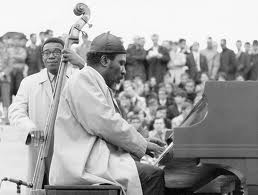
In a recent blog post, Ethan Iverson has a good swipe at anyone (and there are many) who wilfully, or stupidly, misunderstand the work of Thelonious Monk. Ethan said in a post a while ago that should he and I meet we’d probably disagree on most things relating to jazz - an opinion I’ve never really understood quite frankly, because I find myself in agreement on most things that he writes about in jazz, and in particular when he writes about the historical jazz canon. And in this post in particular I think he’s right on the money, both in relation to Monk and his other sidebar criticism of Martial Solal.

I’ve always found Solal to be brilliant, but almost too brilliant. His fluid technique and febrile imagination seem to conspire to refuse to allow him to ever settle on a vibe or an idea for longer than a couple of seconds before he’s off again to demonstrate some other kind of pianistic or improvisational legerdemain. His playing is the musical equivalent of being on a Roller Coaster – full of thrills and adventure, but not something you’d want to do all day.........

Having said that, he IS a true original with a style that incorporates Tatum-esque flourishes but with a very different harmonic approach. His ability to leap from idea to idea is startling and there’s obviously a brilliant improvisational mind at work. He was one of the first really original European jazz musicians and his style was almost fully formed from a very early stage. Here’s an example of his quixotic brilliance in a trio performance of ‘Green Dolphin Street’ recorded in the 60s (couldn’t find any more of this footage on Youtube, which is a pity – looks like a fascinating show) - check out Johnny Griffin’s admiring comment at the end - ‘Ridiculous!’. Yes indeed, it IS ridiculous


But despite the brilliance, or maybe because of it, I often find myself tiring of Solal quite quickly, especially because of his inability, or disinterest perhaps, in sticking with one idea for any length of time, or with letting the music breathe at all.

Which is in stark contrast to Monk’s approach – a man who had an incredible ability to explore and/or repeat small amounts of material for long periods of time. It was Solal’s public dismissal of Monk’s pianism, at a recent talk in New York, that set Ethan off on his angry rebuttal of both Solal’s opinion that Monk couldn’t really play the piano, and of the people who thought Monk’s music lacked seriousness. He also took a swipe at the many people who over the years have believed that Monk’s music could be reduced to a stereotype by just adding a few clusters or sudden displacement of a note or two.

Which is something I’ve felt for years too, and in reading Robin Kelley’s biography (which I previously discussed at length here) it’s clear that this kind of dismissal of Monk as a kind clownish amateur pianist who, as was sometimes grudgingly admitted, wrote interesting tunes, was an opinion that dogged Monk for years when he was alive, (doubtless denying him many work opportunities), and incredibly, seems to be still around in some quarters.

I’ve never ever understood the idea that Monk was a ‘bad pianist’. Unless you maintain the narrow view (and some people do), that a virtuosic 19th century classical approach to the piano is the only barometer of pianistic worth, then surely it’s obvious that Monk was one of the most original pianists in the history of the instrument. How can his detractors on the pianistic front, not hear the SOUND he makes on the instrument? It’s totally unique and has never, to my ears, ever been reproduced by anybody. He is a virtuoso of sound and sonority. And he is a virtuoso of rhythm – he swings as much as anybody, but in his own unique way. His use of rhythm is both extraordinary and ceaselessly inventive

Here’s an example of both of those attributes – the unique sound, and the rhythmic virtuosity and of course the amazing swing


Ethan also mentions, and is critical, about the anecdote in the book that tells of Monk flying through some Chopin, and how this was used in the book (along with the proof of his knowledge of the European classical piano repertoire), as some kind of validation of Monk as a ‘real’ pianist. Ethan makes the point that Monk was often erroneously associated by critics with the European avant garde and this is another point I would agree with totally. Monk’s roots are irredeemably, both socially and musically, in the community from which he came. The section of Kelley’s book that deals with Monk’s childhood in the San Juan Hill area of New York was for me one of the most fascinating aspects of the book. It really clarifies where Monk was coming from – black evangelist church music, stride piano, Duke Ellington – and I think all of that is evident in the Caravan performance that I posted above.

There are a couple of related stories to the Chopin story mentioned in the book, that involve anecdotes concerning Monk playing privately like Tatum or like Bud Powell. I’ve heard these stories before and they’ve always irritated me because they are based on the premise that the way Tatum or Powell played the piano was the correct way to play, and that Monk could do it if he wanted to, but he chose not to. So in an effort to defend Monk, the purveyors of these stories are just reinforcing the stereotype that Monk’s way of playing the piano was wrong. I do not personally believe that Monk could, or would have wanted to, play the piano like Art Tatum, any more than I believe that Tatum could or would have wanted to play like Monk. Monk does not need to be validated in this way – his piano playing represents a unique achievement and he did not need to play like Tatum or Powell (or Chopin!) to demonstrate his bona-fides as a pianist


(Monk's Advice)

Another point touched on in Ethan’s piece is the rarity of good interpretations of Monk’s music. Again musicians often seem to believe that just adding the odd cluster to any phrase makes the music into an authentic interpretation of Monk. But this is such a shallow approach and misses the point completely – in fact misses many points. One of Monk’s strongest opinions revolved around how his music should be played and he apparently said ‘Never mind the so-called chord changes, play the melody!’. And as listed in the famous ‘Monk’s Advice’ page, (transcribed by Steve Lacy from various nuggets of info given to him by Monk) this ‘play the melody’ theme was a consistent one as far as Monk was concerned - ‘Pat your foot and sing the melody in your head when you play’, and ‘stop playing those weird notes (that bullshit), play the melody!’

Melody was sacrosanct to Monk, as was rhythm, and yet so many people playing Monk approach the music as if the melody was something to be dispensed with as quickly as possible in order to get to the changes. It’s a very bebop approach and one that just doesn’t work for Monk’s music. All the character and individuality of his music gets flattened by the blunt instrument of changes running. I remember seeing the band ‘Sphere’ in 1983 – a band with great Monk credentials since both Charlie Rouse and Ben Riley had spent extended periods with Monk – and being very disappointed with the music, mainly because of the pianist in the band, Kenny Barron. Now Kenny Barron is a GREAT jazz pianist, but to my ears he played Monk as if the music was just another set of changes to be negotiated. Sphere were a great band, but in my opinion, not a great band for playing Monk.


One of my favourite recordings of Monk’s music comes from what might seem like an unlikely source – Chick Corea. He recorded what was originally a double LP on ECM – ‘Trio Music’ with the ‘Now He Sings Now He Sobs’ group with Miroslav Vitous and Roy Haynes. One of the LPs consisted of free improvisations, which never convinced me at all. But the other LP was comprised completely of Monk’s compositions and this was great. Corea really gets inside Monk’s music in the sense that the melody is referred to constantly during the solos, and his rhythmic sense is so strong – his phrases are carved out of the melodies.

Corea manages to both reference Monk and yet remain unmistakably himself – the sound he gets from the instrument has that bright sparkling tone that always characterises his acoustic piano work, and here it’s put at the service of the music, using his rhythmic prowess to point up the shapes and angles of Monk’s melodies while generating some of his most swinging playing on record. Having the addition of Haynes, himself of course a former Monk sideman, really helps the music and his bubbling snappy drumming dovetails perfectly with Corea’s clear articulation. Vitous is perhaps not the ideal Monk bassist, with the huge reverb applied to the instrument (by ECM or by Vitous?) making the bass a bit swimmy at times, but as always he’s an impressive soloist and of course this trio has some serious jazz history of it own.

Here they are, more than a decade later, playing Rhythm-a-Ning, and again Corea and Haynes’ affinity with Monk is beautifully on display again. (I have NO idea why Vitous is wearing headphones!)


I recently watched an interview with Corea where he told of working opposite Monk many times in the 60s and described Monk as being ‘one of the greatest musical figures of our culture’. Maybe he needs to have a chat with Martial........

Tuesday, 12 April 2011

Chin16 : DJ North by Northwest "Dan Bale"

Straight out of Cumbria, DJ North by Northwest brings an instant singalong sampladelic classic in the form of "Dan Bale (I Don't Know)", an ode to a man he transparently doesn't know.

Working the underground scene in North-West England for the past ten years, DJ North by Northwest has constantly pushed the boundaries of the club going public. For him a week without a gig is a week without breathing. Going under various aliases, DJ North by Northwest is his moniker for his sampling and mash-up work. For his other names, you'll have to hunt. The virtual B-side here comes in the form of "The Full Moon Party", a collaboration with the Ambleside based band Hot Barn.

Friday, 18 March 2011

Monk - music and inimitable minimalism


Probably well behind everybody else, I’ve been reading the Thelonious Monk Biography by Robin Kelley And in what amounts to a private Monk festival, I’ve also been listening to the Complete Riverside Monk box set which I picked up in Paris recently.

I’ve been listening to Monk’s music for over thirty years now – I remember my father bringing home a double LP Riverside compilation when I was about 13 or so (pictured above – liner notes by Hall Overton!), and being really struck by the unique sound world of this music, which was unlike anything I’d heard in even my father’s extensive collection of jazz records. I didn’t understand it, but then again, not being a musician until I bought my first instrument at 18, I didn’t really understand anything............

Fast-forward several years and I not only played a lot of Monk’s music in various bands (as any jazz musician does in the course of playing this music), I also put together two different trios – one saxophone, one piano – devoted solely to his music, and also wrote the arrangements for a quartet tour where the entire repertoire was Monk’s. So his music has been part of my musical and everyday life for the majority of my time on the planet.

So, given all that, it’s taken me a while to get to Kelley’s book – I think I tried to order it when it came out first but it hadn’t been printed on this side of the water and then it became one of those ‘to do’ things. But it was worth the wait – I’m not finished it yet (as I write this), and I’ll be sad when I am, because it’s been a great read. As has been remarked previously by others, the amount of research Kelley did was phenomenal – the guy seems to have found out what Monk was doing on a week by week basis for about thirty years! And he not only undertakes amazing research, he also casts some light on on Monk’s (in)famous ‘eccentricity’, by showing that Monk was clearly bipolar and far from his eccentricity being something amusing, his condition caused tremendous difficulties both for him and for his family. The fact that his illness went undiagnosed for so long was caused both by a less developed understanding of the condition in those days, and the fact that the mental state of a black man was a very low priority for 1950s and 60s America.


The person that emerges in this book is a very admirable man – a genuine family man, generous to his friends and with his time to other musicians if they showed a genuine interest in what he was doing. He was also very musically demanding on his sidemen and colleagues, hurt and offended by the lack of recognition he often got, and by the reputation he had for being ‘crazy’. I knew that Monk had a difficult time in his early career, but until I read this book I hadn’t realised just HOW difficult it was. For the first 15 years of his professional life he struggled to get work of almost any kind – his reputation for being ‘weird’ both musically and personally, (not to mention a couple of minor drug busts with the consequent loss of his cabaret card), made it incredibly difficult, for a man with a wife and two young children, to support his family and develop his music.

Despite the appalling general lack of recognition he received around that time, there were several people who really swam against the tide and supported him professionally and who come out with great credit for it – Alfred Lion and Francis Wolff of Blue Note Records, Max and Lorraine Gordon (the latter going as far as carrying boxes of Monk’s records to record stores in an effort to get them to sell them), and George Wein. And his manager Harry Colomby emerges with a lot of credit for the work he put in trying to get work for someone who must have been both difficult to sell, and a very difficult client at times. In fact he was Colomby’s ONLY client for years – Colomby remained a schoolteacher throughout his association with Monk, and his role as a friend, manager, and agent for one of the world’s greatest composers and jazz musicians is a truly extraordinary story in itself.


As is the story of Nellie...... Without her, Monk wouldn’t have had a hope of surviving the early days in the way that he did, or dealing with the pressures associated with his fame from the late-50s onwards. Her devotion to him is both touching and extraordinary, and he was in turn devoted to, and totally dependant on her. Theirs is a unique story in the New York jazz world of that time – a stable relationship that was put under the most incredible pressure by economics and social class. How she managed to support Monk, raise a family, and deal with her own health issues over a fifteen year period, when almost no money was coming into the house almost beggars belief. But she did, and then when Monk received the recognition due to him at last, she metamorphosed into his road manager, talking care of literally everything for him while they we touring and working.

Of course the legendary Nica is heavily featured in the book too. Hers is a unique story – European nobility, wealthy but disowned by her family because of her bohemian ways, takes up with the NY jazz world and becomes an intimate friend and supporter to some of the most important figures in the music at that time, and to Monk in particular. The extraordinarily comfortable relationship there seems to have been between herself, Monk and Nellie is a story in itself. An unorthodox triumvirate that shouldn’t have worked, but did – for years.

While the book went over some ground I already knew from a previous biography of Monk by Leslie Gourse, I really learned a lot from this book about where Monk came from, the society from which he emerged and the whole jazz scene at that time.

I was again struck by just how much playing these guys did! The scene has changed so much and it’s very easy to forget the huge impact on everybody’s playing that must have been made by the sheer number of gigs they played. In a time when a jazz club gig was a minimum of three sets per night, 6 nights per week, and a possible couple of extra matinees thrown in, jazz musicians put in hours on their instruments in a way that’s almost impossible to do these days. Bands could stay together for long periods and develop their music in a way that to today’s jazz musician is really enviable.


And for those of us (which is nearly everyone by now) who only know that period from the recordings, it’s startling to see how much playing guys like Monk did with bands other than the ones we know from the recordings. For example there’s a mention of a gig at Town Hall with a bass and drum team of Scott LaFaro and Elvin Jones! I know I would pay a LOT of money to hear how that sounded – to hear how Elvin and Scotty sounded together, and how they sounded playing Monk’s music. Monk also hired LaFaro and Paul Motian for a week in a club in Boston! The legendary Evans’ bass and drum team, but playing with Monk – wow..... Apparently Monk was very taken with LaFaro and wanted him to join his band, but he’d already committed to Evans. In the book, Motian spoke very highly of the gig with Monk and tells a great anecdote about Monk asking him to sing his ride cymbal beat to him before the first gig and suggesting adjustments to it.

What also becomes clear by virtue of an accumulation of anecdotes, is just how dysfunctional many of the musicians were in the NY bebop jazz scene in the 40s and 50s in particular, but also into the 60s. The book is littered with stories of guys not showing up for gigs, being late, being drunk, being stoned, starting fights (physically sometimes), disappearing without explanation, dying young from diseases that would normally be rare in their age group, being psychotic, getting shot, knifed etc etc. Of course we all know these stories but when you read them in concentrated form like this, one after another, it really brings it home what the scene was like. It was (with some exceptions) a drug ravaged, alcoholic and dysfunctional community – severely discriminated against by society in general and by the organs of the State in particular. The story of Monk’s treatment at the hands of the police in Baltimore for example is both tragic and, even at this distance, enraging. Yet this underclass, operating in these appalling economic and societal conditions, managed to produce some of the greatest musicians and music of the 20th Century. Extraordinary.

A recurring theme in the last third of the book is the lack of new compositions created by Monk after about 1958. It’s interesting that he seemed much more prolific in the years when he was struggling to get gigs or be taken seriously as a player or composer. Once he became famous and began to get the recognition he’d always deserved the compositions dried up and his contract with Columbia seemed to be one long conflict between his contract, which demanded three albums a year, and his inability to come up with the material required. It was clear that the demand for new pieces stressed him considerably during this period, and Kelley puts down his inability to compose to exhaustion brought on by constant performing. But I’m not sure this is a strong enough reason for Monk’s compositional river running dry – when you look at Monk’s schedule, even at the height of his fame, he often had three weeks off here and a month there, and contemporaries like Coltrane for example, who was even busier than Monk, were producing new compositions all the time. It seems to me that Monk’s illness must have had something to do with his latter-day struggle and inability to come up with new material.


He was heavily criticised for playing the same repertoire over and over in the 60s, yet if you look at the videos on Youtube from this period, it’s hard to see why the critics are complaining, since his approach to these particular hoary old chestnuts is so fresh every time. Here was a guy who was really improvising every time he played. He never does any mere running through the changes, he’s always improvising off the melody. He does NOT play the same on Blue Monk as he does on Straight No Chaser – Monk doesn’t have a blues template, he really improvises every time he plays a tune – no matter how many times he’s played it in the past.

Another thing that struck me as I was listening to the Riverside Monk collection was how influential Monk was outside of the more obvious players usually discussed when Monk’s influence is mentioned (Jaki Byard, Andrew Hill, Herbie Nichols, Eric Dolphy etc). Listening to his solo piano recordings in particular, I came to realise that Monk was really the first minimalist in modern jazz. Yes, Basie had that aspect to him too, but it’s different. Basie swings tremendously while just using a few notes, and Monk does that too, but in Monk’s solo piano music there’s a stripped down quality and a deliberation about playing sometimes really tiny amounts of musical information that’s uniquely Monk. A kind of stillness and ability to listen to the sound the music is making rather than just listening to the notes being played. Monk will hang a chord or a cluster and just leave them there for a moment, savouring the effect, in a way that you hear in later music by people like Ran Blake (another Monk disciple) for example. And I can even hear it in the sometimes minimalist approach of Paul Bley, or Bill Frisell, or the pared-down drumming of present-day Paul Motian. In an era when jazz musicians moved towards ever greater levels of floridity and virtuosity, Monk sometimes espoused a Spartan approach to his material in a way that not only had never been done before but pointed to a whole aesthetic philosophy that would be adopted by future generations of players. He seemed to have an ability to listen to sound as an end in itself – a concern with timbre that was years ahead of his time. Only Ellington (a clear influence) can really be compared to Monk in this respect, and even then it was different.

Let’s finish by taking advantage of the still miraculous Youtube to watch Monk in Japan in 1963 playing ‘Ba-Lues-Bolivar-Ba-Lues-Are’. Check out the rhythmic vitality of the comping, and the way he takes the last phrase of the melody and uses it to comp for the first two choruses of the tenor solo. And also listen to the way he solos thematically all the time... And when you watch him play, you can see the great truth in what Kenny Werner wrote in Effortless Mastery where he said something like, “I don’t want to play like Monk, I want to feel like Monk felt when he played!’

Then there’s Rouse playing the music with such authority, and John Ore swinging the quarter note into bad health........And then there’s the amazingly musical Frankie Dunlop who as always, carves out a uniquely individual approach to the jazz drum solo. I LOVE Dunlop’s playing (I always preferred this quartet to the later one with Larry Gales and Ben Riley, good and all as it was), it’s such a shame he went off to a showbiz career (including apparently, stints as a female impersonator!) and left so little recorded work behind.

So, this is the Monk quartet of the early 60s – and the critics were complaining about THIS!?

Saturday, 26 February 2011

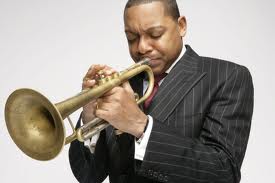
A Few Observations on Wynton


This post was prompted by the recent Randy Sandke affair (Peter Hum has a particularly good article on this here), where Wynton’s name loomed large in the arguments on both sides, yet it was something that he himself had no direct involvement with. Wynton’s huge profile in American musical politics in general and jazz politics in particular ensures that his name comes up again and again in all kinds of contexts.

I remember the first time I saw Wynton Marsalis play live. It was in 1983 at the Cork Jazz Festival and he was playing with the ‘Black Codes’ band. Not that it was called the Black Codes band, but it was virtually the same band that made Black Codes from the Underground a little later. It was a late night gig, starting at midnight, and there were about 7 of us musicians sitting together, ready to check it out. We knew who Wynton was, because there’d been such a palaver about him already, and we had heard both him and Branford (on recordings), with Blakey’s band. But we didn’t know Jeff Watts, or Kenny Kirkland, (or the bassist Phil Bowler) and didn’t really know what to expect. They came on stage and launched into something – probably Nozz-Moe_King which I wouldn’t have known by name at that time – and it was like being punched in the stomach. That is if being punched in the stomach can ever be described as being a pleasant experience. It was amazing – the power, the virtuosity, the turn-on-a-dime tempo changes – the sheer brilliance of it. At the time there was nothing really like it – yes, it was coming from the Miles 60s quintet conceptually, but it had its own thing too, especially the way the rhythm section played, espousing a kind of codification of the experiments in metric modulation that Miles’ group had touched on, and the hook-up between Watts and Kirkland in particular was spectacular.

At this point Wynton hadn’t taken on the role as spokesman for ‘real jazz’ in the way that he later did – he was outspoken, but people were still focussing on his trumpet playing at that time, and the sound of his band, rather than discussing him as a demagogue or seeing him as a divisive figure. And I think this is an interesting thing about Wynton, looking at it from the vantage point of where we are now – the more political power he took on, the more discussed his positions on what constitutes jazz were argued over, the more controversial he became, the less interest there seemed to be in his actual music.

His personal charisma, amazing trumpet playing and the way his band played was at one point incredibly influential on a particular constituency of young musicians, founding the ‘Young Lions’ movement and espousing a return to a way of playing that looked to emulate earlier generations of players rather than forging ahead with something that hadn’t been done before. Ted Gioia in his very fine History of Jazz, makes the interesting suggestion that this movement represented possibly the first time in jazz that a large coterie of young musicians had set their aesthetic compasses backwards rather than forwards. Jazz had always had a cult of modernism from its very earliest days, and this was the first time that any kind of serious, and philosophically underpinned, retro movement had been seen among young musicians.

For myself there was a period where I had an avid interest in what Wynton was doing musically – particularly in the area of rhythm. I got the eponymous first album and then bought Think of One, ‘Black Codes’, and then on into J Mood, Marsalis Standard Time Vol.1, and finally Live at Blues Alley. When first Kenny Kirkland and then Jeff Watts left the band and the music became even more referential to the past, and Wynton became more and more outspoken regarding his views on what did or did not constitute jazz, I became less and less interested in his music. I never enjoyed his large scale pieces, or his new band, and the final straw for me was when he recorded with pianist Eric Reed on Jelly Roll Morton’s “Tom Cat Blues,” recorded on the same sort of wax cylinder equipment that Morton used on his first recordings in the 1920s – the cover also featured Wynton in a sepia-toned imitation of an old photograph.

After that I paid little attention to Wynton’s music, his prolific output all passed me by with the exception of two recordings that were sent to me in a brief incarnation I had as an online jazz CD reviewer. It was a pretty good deal – I got free CDs and a little taste in return for 100 word reviews. Two of Wynton’s CDs landed on my doorstep - Marsalis Plays Monk and Live at the Village Vanguard- the latter an 8 CD set that I’d never have laid out folding money for, but that contained within it reminders of how great a player Wynton was. Some of the solos on this recording are simply stunning in terms of inventiveness and virtuosity. But again I feel some of the other players are not even close to matching Marsalis’ improvisational ability and there are real longeurs on the album – I found myself waiting impatiently for Wynton’ next solo. The Plays Monk recording is the only one of Wynton’s later recordings that I like in its totality and listen to occasionally. I think he captured the essence of Monk’s music really well there, and there are some terrific arrangements of Monk’s lesser known pieces.

But considering how prolific he is, and how long he’s been on the scene, it’s interesting to note that his recordings seem to make very little impression on the contemporary jazz scene these days. There is no question that Wynton looms much larger as a prosletiser for for a particular viewpoint, as a politician who deals with the big business world of arts funding in the US and of course as the eminence grise behind the whole JALC project. I wonder how he feels about the fact that he’s much more prominent as a public figure than he is as an improviser, composer and trumpet player? For someone with the prodigious gifts he has, it must be galling to have to spend so much time discussing your musical politics and have so much interest heaped on you for this aspect of your life, and very little interest taken in whatever your current musical project is.

And it’s understandable that his doings and pronouncements are so closely followed in the States. He does after all control, in a country with almost no funding for its own indigenous art-music, the largest funded jazz entity in the US under the umbrella of the JALC. In Europe however, Wynton’s doings and sayings don’t hold nearly the same fascination for the jazz fraternity as they do in the US – naturally enough I suppose. As someone who deals with young jazz musicians on a daily basis it’s interesting for me to see that Wynton has a very low profile for these same young musicians. In general they know him of course by reputation, but usually they only know two albums – ‘Black Codes’ and ‘Standard Time Volume 1’ - they’d be hard pressed to name any other albums from that period and they certainly don’t know anything by him recorded in the past 15 to 20 years. I find it ironic that for all his boosting and espousal of earlier styles of playing, he is best known musically for a few albums he recorded a quarter of a century ago, and ones in which he genuinely did something new with material taken from earlier players, rather than playing something that sounds like a pastiche (no matter how well played a pastiche it might be) of those earlier players.

As for me, I have the utmost respect for Wynton both as a musician and as a jazz philosopher. I don’t agree with some (and sometimes a lot) of what he says, but everything is argued from such a position of deep conviction and intelligence that it’s impossible not to give what he says a fair hearing, even if you disagree completely with it. He’s incredibly articulate and has become genuinely more fair-minded as he’s gotten older, and of course there’s still the trumpet playing......... In all of the stuff that goes on around him, it’s often forgotten just what a great jazz trumpet player he is. It was after all his playing that gave him the platform to air his views, and that made people pay attention to those views. Yes, he is an astute politician, but if his playing had been in any way run of the mill, nobody would have listened to anything he said, any more than they would have listened to the rest of us...........

Though I’ve devoted my professional life to the playing of jazz, the teaching of jazz and have been immersed in listening to jazz for at least as long as Wynton has, I know he wouldn’t even allow me to play as much as a few bars with him because I play the ‘wrong’ bass. But despite this and despite the fact that he often says things with which I strongly disagree, I still forgive him, because of stuff like this............

Saturday, 5 February 2011

Black and White?


I can’t believe they’re still arguing over the black/white thing in the US jazz blogosphere at the moment......... The trumpeter Randy Sandke wrote a book called Where the Dark and the Light Folks Meet: Race and the Mythology, Politics, and Business of Jazz which apparently, (I haven’t read the book), claims that some white jazz musicians got/are getting a raw deal from left-leaning white critics over the years and, due to the political/PC bias of these critics, were never given the credit for their achievements. This has created a storm in a teacup effect with heavy hitters from the jazz blog world weighing in (mostly negatively towards Sandke’s thesis) and Sandke taking on all-comers with huge rebuttals of their arguments, (how much time does Sandke have!? If it was me it would be just too exhausting to go into the minutiae of everyone’s arguments for the sake of rebuttal).

To an outsider to American jazz politics like myself, the arguments about whether somebody dissed Michael Brecker in an article several years ago, or who did or did not claim Bix had a poor sense of rhythm just seems daft. Ethan Iverson has a gigantic piece on it which gets into the fine detail of who said what, when, and about whom. Apparently Sandke is about to give a rebuttal to this piece – which will join the rebuttals he’s already made in response to Howard Mandel and David Adler

From where I’m sitting it seems extraordinary to watch some very famous writers and musicians savaging each other over this subject. Surely this argument about who was most influential and why, or who got their due and who didn’t, is over? It seems especially bizarre to see suggestions being made that X didn’t get his due because he was white, and Y was over-praised because he was black. And vice versa. I really didn’t think so many serious writers and musicians could get so passionately involved in the arcana of these arguments. Surely there are more important things to discuss these days – such as the dwindling playing opportunities for ALL musicians, black OR white?


As to the argument that jazz history has been skewed by a political/racial agenda - without having read the book, but being an avid student of jazz history (via the music rather than the books on it), it seems glaringly obvious that though there have always been good and great white players, the vast bulk of what constitutes the influential history of the music (at least up to 1970), and the major developments in jazz, have emanated from the Afro-American community. There’s no getting away from it – no matter how many Bix’s, Artie Shaws, Benny Goodmans, Stan Getz’s, and Bill Evans’ (and many other great white players) you acknowledge, if you take Armstrong, Ellington, Parker, Davis, Ornette and Coltrane (not to mention Monk and Mingus.....), out of the mix then it’s all over – there’s no real major body of work around which the other musicians – black and white – revolve.

You could make an analogy with classical music in this respect – yes there are lots of great non-German composers (especially post 20th century) but if you take Bach, Mozart, Haydn, Brahms, Mahler, and Schoenberg out of the picture then there probably is no picture left since the development of the music itself is so dependant on the work of these German composers.

Jazz history is completely dependant on the work of these aforementioned jazz greats and the music can’t be imagined without them. And they’re all Afro-Americans. It’s a music that sprung from the Afro-American community in the US and while there were great white players involved from even the earliest times, the major development of the music revolves around Afro-Americans.

At least up as far as 1970


After that the picture is far less clear – you have the rise of the fusion movement, most of which was dominated by white players, and the transformation and maturation of European jazz – undergoing an evolutionary process which saw it change from being an imitation (sometimes poor) of American jazz into something which had highly individual regional characteristics and many really great and original instrumentalists. In America over the past thirty years many influential instrumentalists – Pat Metheny, Michael Brecker, Dave Holland, Brad Mehldau, Kurt Wosenwinkel, Joey Baron, Dave Douglas and many others – have been white. And of course there have been many influential black players as well – Jeff Watts, Terence Blanchard, Mark Turner, Kenny Kirkland, and many others including of course Wynton and Branford Marsalis. However the domination of the music by Afro-Americans has waned since 1970 and to me this is a subject far more worthy of discussion than the current furore over who dissed who, who was quoted out of context, and who said what and when.


It seems to me that Afro-American society at large has pretty much abandoned jazz as being something that has any relevance for them. Of course there are still players coming out of the Afro-American community, and people in the community for whom the whom the music has importance, but as a whole the music doesn’t seem to have much support from the people from whom it originally sprang. In my recent trip to New York I went to 11 gigs in 5 days and saw hardly any Afro-Americans in the audience.

And I think the current apathy and lack of interest in jazz displayed by the vast majority of Afro-Americans is a tragedy for the music and a tragedy for Afro-American culture. And I think it’s a far more interesting and important discussion than the current Stateside squabble that seems to be more about bruised egos and people scoring points off each other than any effort to bring clarity to their argument. And, sitting here on the other side of the Atlantic, the argument itself seems like such a waste of time to me. Surely we have more important fish to fry these days than whether somebody misquoted Gary Giddins!?

Thursday, 20 January 2011

New York Jazz Holiday


To the Village Vanguard to see Kurt Rosenwinkel

Me: ‘Hi, I’ve bought three tickets online for tonight – here they are. Thank You’

Door Guy: ‘Certainly, let me see.......(consults list), yes, here we are and there you go – enjoy the show’

Now that’s what MIGHT have happened if it had been any other jazz club in any other city in the world, but this being the Vanguard, in New York City what actually happened was that I delivered my part of the script and the tickets, and was met with a blank stare and disinterested shuffling of the list by the troglodyte on the door, whose studied boredom and lack of any verbal response made be feel like giving him a richly-deserved clump across the side of his head for his rudeness and stupidity.

Of course there are rude people everywhere, and other places where rudeness is the norm (Hong Kong!), but only in New York do some people pride themselves on being jerks. They imagine it’s cool somehow, and wear it as a badge of honour, and of all the possible things one could be proud of, this has to be the stupidest – being a jerk is easy! Anyone can do it! Being polite takes a little (and only a little) more effort. The rudeness itself I don’t mind, (and after about 15 visits to NYC I expect it), but the pride that some New Yorker’s take in it I find really irritating, stupid and a bit pathetic actually. Rudeness as hipness? Ha!

Rant over.

I went to New York with my son Chris, who’s a guitarist, for a ‘jazz holiday’, packing in as much music as possible in 6 days, picking up my new bass, catching the Winterjazz Fest, and seeing as many friends as possible. There’s no better place to undertake a musical orgy of this nature – there is no question that New York IS the jazz capital of the world. There are more great (and some not so great) jazz musicians living there and more jazz activity going on there, than in any other one single place in the world. This has both advantages and disadvantages for the musicians who live there (more on that anon), but for the casual visitor such as myself, it’s nothing short of an embarrassment of riches and I try to get over there at fairly regular intervals to see friends, play sometimes, and see as much music as I can.

Back to the Vanguard and Kurt. He was playing with a quartet (Aaron Parks, Ben Street and Ted Poor), and I was kind of disappointed with it – I felt it was underpowered in terms of energy and commitment from the group and I couldn’t make up my mind whether it was because the band didn’t feel like getting it going or whether they were just having an off night. It seemed a bit careless and casual at times, and really, considering its history, carelessness and casualness are not qualities you should be bringing to the Vanguard if you’re lucky enough to get a week there. Kurt really did get it going on a Byard blues in the second set and then you could see what all the fuss is about, but overall I felt a bit short-changed.

My son disagreed with me, he thought it was great – but then again, he’s a guitarist! The deification of Kurt by pretty much all guitarists under the age of thirty continues apace, and I can appreciate why – he really is unique and has his own thing. But he’s reaching that point where (like other icons before him) he’s in a winning situation with the audience as soon as he takes the guitar out of the case and so the motivation to grow and challenge himself has to come from him and him alone all the time. I’m not sure he really was up for that particular challenge on this particular evening.


(Dafnis Prieto)

Winter Jazzfest

The following night it was on to the Winter Jazzfest. I had deliberately made sure our visit coincided with the festival having read great reports of it the year before. And it was great – musically. But organisationally, to use a technical term, it sucks. It’s been a long time since I’ve had to listen to music under more uncomfortable conditions, where the audience is treated more shabbily and where the admission and ticketing procedures are more shambolic and audience-unfriendly. To buy a two-night ticket in advance and then to have to queue in the freezing cold two nights in a row to pick up tickets for the individual nights (why!?) and then not to be guaranteed entry to anything (more freezing queue-ing), and to have to endure hours of standing at the concerts themselves while not being able to actually see what you were hearing, is an indictment of the festival organisers.

Anecdotally too I’ve heard the musicians are paid very little if anything at all. If this is true then it’s a disgrace, since the much touted musical riches of which the festival boasts is based on these same musicians not getting paid. Which would be cool if nobody else got paid either. If ever I’m asked to play for nothing I always say that I’ll be happy to do it as long as the promoter, the bar staff, sound engineers, ticket sellers, doormen, and anyone else involved with the event (including the venues) are not getting any money either. But that’s never the case – it’s pretty much always the musicians who are the saps in these situations. It really leaves a bad taste in my mouth when everybody wins except the guys around whose work and dedication the whole event revolves.

But musically, and hardly surprisingly given where we were, there was some incredible music to be heard (if not seen). We attended some great performances by bands working in a wide variety of stylistic/musical approaches and the 40-minute set format of the festival really does aid multiple consumption of music, especially given the diversity of the acts. Not everything was great, but most was at least very good and often much more than very good.

I managed to catch Nguyen Le with Rudresh Mahanthappa (great!), Dafnis Prieto with Jason Lindner and Kokayi (very interesting and the improvised ‘auction’ was outstanding), Jamie Baum’s Octet (great writing), Dana Leong, (terrible, risible), Tineke Postma (very well played, but maybe a bit naively programmed considering the wham-bam-thank you ma’am nature of the festival set), Miles Okazaki with Guillaume Perret and Damion Reed (fantastic set, some very original music played by a real band), and Steve Coleman and Five Elements (a real return to form, killer set and the new band sounds great – the addition of piano and guitar really adds something).

Musically it was great for the most part and I know I inevitably missed a lot of great music too, you can’t be everywhere. But really the organisers need to get their act together – a festival boasting of its greatness while treating both audiences and musicians badly, and depending on their goodwill and willingness to put up with poor conditions is doing some pretty hollow boasting................

(with Lindsey Horner)
Socially the festival was very nice too of course and I ran into so many musician friends – Jim Black, Ben Perowsky, Rudresh Mahanthappa, Curtis Hasselbring, Nguyen Le and and many others just in the two nights we were there. And I hung out with several other musicians over the course of our visit – Arthur Kell (our very generous and gracious host while we were in NY), Jonathan Mele (whom I knew from his time in Dublin), David O Rourke (another Dublin connection – we knew each other when we were both jazz tyros, going to every gig we could in the late 70s), and especially Lindsey Horner the great bassist who is one of my oldest friends in music. Lindsey studied music in Dublin in the late 70s/eartly 80s and was on the scene, and we became good friends and have been ever since. In recession-ridden Ireland of the 80s (though we have now renewed our acquaintance with recession in recent times) about 30,000 people a year were leaving Ireland to work abroad – we used to say that Lindsey was the only person of that era to travel in the opposite direction.


(Manifestation of the iPhone Plague at Kenny's Castaways)

One thing I noticed at the gigs in NY, which is now pretty common everywhere, is the iPhone Plague....... At every gig, little beacons of light appear in all corners of the room as people obsessively check their messages, or send SMS messages. It’s impossible to look around the room and not see someone checking their phones. It’s become both a plague at gigs, and a worrying indicator that people find it more and more difficult just to concentrate on one thing at a time. Even something as great as live music can’t hold their attention anymore, everything takes second place to those damn phones. And these are adults who presumably have only had cell phones for about the past 10 years – what will it be like for kids who have been raised with them? Will they have any attention span at all or be capable of listening to music without doing something else at the same time? Brave New World..........


To the Jazz Standard on a Sunday morning to do a rhythmic clinic for young musicians. This was part of the programme they run there for talented kids called the Jazz Standard Discovery Programme, a terrific initiative directed by my old friend, guitarist arranger and composer David O Rourke, where the kids get a clinic or workshop or some kind of educational event first and then play – for real people, in a real jazz club! One of the biggest problems for young musicians (and many older ones too) these days is that it’s really hard just to be able to find places to play. For these kids the chance to play in the Jazz Standard on a Sunday morning to a full house in a jazz club atmosphere is invaluable and something that they’ll always remember.

And they were very talented kids too – very pleasant and engaged during my presentation and enthusiastic and disciplined in how they presented their music to the public. After all the ‘is jazz finished?’ talk that seems to excise the minds of everyone in the music these days it’s somehow very reassuring to see a bunch of 14-18 year olds who are interested enough in the music to take the time to learn something as challenging as ‘Fee-Fi-Fo-Fum’

Terence Blanchard

In the evening we went to see Terence Blanchard’s quintet at the Jazz Standard – something I thoroughly enjoyed. With guys like Blanchard, who because of his gifted youth has been around for so long already, it’s easy to take them for granted. At this point he has such a huge body of work behind him and is recording and writing all the time, it’s easy to underestimate just how exceptional this guy is. This was brought home to me during a blistering set with his quintet in which Blanchard demonstrated what a true improvising virtuoso is, and in which his group, propelled along by Kendrick Scott, explored three pieces in a set that harked back to traditional jazz values. Having just come from the Winter Jazzfest where the eclecticism of contemporary jazz was patently evident and where all kinds of grooves were utilised and influences flaunted, Blanchard’s gig was a nice reminder of how good more traditional jazz can be in the right hands. His band demonstrated again that in the end it’s not really about the material (he finished the set with ‘Autumn Leaves, the hoariest of all hoary old chestnuts), but the imagination and creativity that you bring to it. As a bassist I must say I was really impressed by Joe Sanders, a guy I’d not heard before but who operated in the creative space between the drums and the soloists in a way reminiscent of the way Ron Carter bossed Miles’ quintet in the 60s, but without aping any of his mannerisms. Real creativity in accompaniment and cracking the whip in the rhythm section.

Brazil!


(Cidinho Teixeira, Fabiana, Itaguara Brandao - Zinc Bar)

Whenever I’m in New York on a Sunday, I always go to the Zinc Bar to hear Cindinho Teixeira’s group playing outstanding Brazilian jazz (it’s almost a religious observance for me......). The spirit that’s on display here – and the almost careless virtuosity – is always uplifting, and they play music in the way that I believe it should be played. They always give you the vibe that there is nothing better a person could be doing than playing music. And that’s how it should be – it IS a privilege for us to be playing music, and especially creative music, yet you’d often not know that from our onstage demeanour - shuffling on stage, almost never speaking to the audience, no tune announcements. No wonder ‘civilians’ often feel that attending a jazz gig is like being at a meeting of a secret society........ But not with the Brazilians – they display a wonderful combination of incredible musicianship with an esprit de corps that’s just a pleasure to witness. And of course the music is great too! They’ve been doing this gig on Sunday nights for 15 years, and it shows. Piano, bass, drums and voice with occasional sitters in. Unfortunately the second set was blighted by one of these – the saxophonist Alex Foster who sat in on difficult tunes he patently didn’t know, played overlong solos littered with blues scale clichés, with the microphone rammed into the bell of his horn and generally managed to suck all the life out of every piece he played on. It’s the kind of thing that gives saxophone players a bad name...........


(My new bass)

The New Baby

Apart from the music and the hang, the other major reason for me to go to NYC on this trip was to pick up my beautiful new bass. This was custom built for me by the great luthier Harvey Citron who lives and works in Woodstock. Lindsey was kind enough to drive us up, so we set off in a blizzard and made our way to Harvey’s place and picked up my new baby. It’s a very exciting thing to get a new instrument, especially one as good as this. Once again it’s an acoustic bass guitar, but with a narrower body than my old bass and with more electronic control.

I’ve been exclusively playing my other bass since 1993, so to get a new one at this stage is really something – terra incognita. I was wondering if it would be too different to the one I have and maybe I’d not enjoy playing it as much as I’d hoped. But one quick run up and down the neck of the bass scotched all those fears – it’s a wonderful instrument to play with a great sound, and fits my hand beautifully. What’s interesting to me is how different it is to my other one – because of the narrower body it doesn’t have as loud an acoustic sound as my old bass, and it has more of a feel of a bass guitar than the old one too. The old bass has a lot of upright qualities to it, due to its large body size and lack of any volume or tone buttons on the body – it’s just the sound of the instrument and trying to reproduce that as closely as possible on the amp. With the Citron there’s far more control (bass geek alert!), since it has 2 Piezos and a magnetic pickup so you can move between the acoustic sound to a completely electric sound. I can see myself using both instruments in different settings – the older one for more out-and-out ‘jazz’ settings, and the Citron for other situations.


(Lindsey and I collecting the bass in the middle of a blizzard....)

New York - Beauty and The Beast

So, a week in New York and a good battery charge as always. Looking back on it, the Winter Jazzfest pointed to both the strengths and weaknesses of the NY jazz scene. On the one hand there’s an extraordinary concentration of great musicians in a very small area, making for a hothouse creative atmosphere and an abundance of players on every instrument who play on a very high level. If you’ve got a creative project that you want to do, you will definitely find the right musicians for it in NY. I think that’s especially true of drummers – the amount of great drummers in New York is just scary, I really envy New York musicians the access they have to these drummers.

Being a jazz musician in New York also means being exposed to an endless stream of great gigs too and opportunities to hear some of the best players in the world playing in intimate settings. As a player you can measure yourself against some of the best and this can drive your development and technical abilities (sink or swim!). You can also get opportunities to play with great musicians in informal settings that don’t really exist outside the NY ‘session’ scene. These are all serious plusses for the way things are in New York.

On the minus side it has to be said there are just far too many musicians in New York for it to make any sense on an economic level. The money paid for playing clubs in NY is laughable – there is no way you could make a living by solely performing creative music in New York. The abundance and availability of musicians and the lack of places to play drives the price musicians can charge for NY gigs down to below subsistence levels. It’s a buyers market for the clubs and the musicians suffer. For all the advantages of being cheek by jowl with so many great musicians, there is the reality of the economics of it. A lot of the New York musicians I know work in (often menial) day jobs that have nothing to do with music, and the reality for them is that they’re not going to get out of that situation anytime soon. As they get older and take on responsibilities the typical situation of doing two rehearsals of original music for a gig that pays $30 is revealed for the economic luxury that it is. All that work, all that practice, all that study, all of that creative energy, and in the end you get less than if you’d done a four-hour shift at Dunkin’ Donuts......... The New York jazz scene depends on the willingness of a large percentage of its musicians to put musical value before economic reality. But with performance opportunities shrinking even further, and ever more musicians arriving in New York like gunslingers riding into town to prove themselves, can this model survive?


(Rudresh and I survey the scene....)

And one other aspect of this that I’ve not seen discussed too much is the distortion and depletion of the national jazz scene created by the never ending influx of musicians into New York. The US jazz scene, as a national scene, is almost non-existent. Apart from NY there are some scenes of reasonable size in a few places – Boston, Chicago, New Orleans, San Francisco, and maybe a few others. But all of these pale into insignificance beside the bloated New York scene. And this just can’t be healthy for jazz in the US. What you have in the US is one huge scene with far too many musicians and no money, and a series of cities, often with over a million people in them, with virtually no scene at all. If you read any jazz history (and fairly recent history at that) you learn that there were scenes in many cities (Detroit, Philadelphia, Los Angeles etc.) and that each scene had a particular flavour in the way the music was played. There were in fact regional dialects of jazz and there was a touring circuit. There may be still regional ways of playing the music these days (I’m not in a position to say, but outside the New Orleans scene, I suspect not), but the touring circuit is certainly gone. To get an idea of how difficult it is economically to tour in the US, have a look at this.

There is a constant refrain of ‘man, you gotta go to New York’ that’s sung to any player of any ability in the US - it’s held up as the Nirvana for jazz musicians, and that’s perfectly understandable. But the reality is that if a really good player from a regional city leaves that scene, it will be impoverished by his or her leaving. If every major city in the US had a relatively healthy scene, the audience for jazz would be bigger since regional cities would not just depend on the occasional visits by heavy hitters from NY in order to hear some good improvised music, and audiences would grow. Good local players would grow the scenes in these towns and in turn create a touring circuit for other musicians (and themselves).

A good example of this can be seen in Europe – not by any design, but simply by geography and culture. In Europe you have a variety of different and relatively healthy scenes based around different cities. Paris, Berlin, Koln, Amsterdam, Brussels, Copenhagen, Oslo, London, Barcelona, Rome , Helsinki and Stockholm all have sizeable scenes – none on the scale of New York, but big enough to sustain local musicians and create a touring circuit both for them and for visiting Americans (Europe is still the financial El Dorado for a lot of NY musicians). If a city were to emerge in Europe in which all the activity of the European scene were focussed, in the way that exists in NY, the other city’s scenes would wither and die, just like the regional scenes in so many US cities have withered and died. And the regional dialects of French, Swedish, Italian and German jazz would probably die too along with it.

As a jazz scene New York reminds me of one of those huge edge of town malls that arrives in an area and sucks all the economic life out of the high streets of any town within 50 miles of it. Nearly the entire US scene is based there, and this ‘gotta go to New York’ mentality means that it’s almost impossible for a regional scene to hold on to its good players. They in turn all arrive in New York where they have to scuffle and jostle for financial crumbs.

Let’s imagine that say 30 players of every instrument were to leave NY tomorrow and go back to their home cities and expend their energy there and develop their own scenes there, how much healthier would both those regional scenes be and how much better economically would the New York scene be for giving the musicians there a little more economic room to breathe? I’m not suggesting forced repatriation of all bassists! Nor do I have any solution to the problem as I see it – it is what it is and it’s hard to see, for lots of reasons, how it will ever be any other way. I’m just making the point that the huge concentration of musicians in New York is definitely not an unreservedly healthy thing – yes it provides an incredible level of musicianship and creative music, but at what cost to the musicians and the national scene?

New York has always been great for jazz, and always will be. I just wonder how long more can the musicians pay the real-life price for that greatness?

Saturday, 1 January 2011

Lies, Damned Lies and Statistics (and Happy New Year)


Another year, another blog. This is either the last one of 2010 or the first of 2011, depending on your point of view – or mine I suppose. It’s been an interesting year in terms of writing the blog – with the arrival of Google Stats I’ve been able to see which posts created the most interest and were the most read. And reading the stats taught me that I often completely misjudge which topics are of the most interest to readers. A quick look at the stats for the year give me the following top five:

1. The post about great jazz musicians playing on terrible ‘jazz’ recordings by classical musicians looking for a bit of street cred

2. A post about the possibility that Bill Evans influence has slid somewhat off the jazz radar of young musicians

3. Elvin Jones – the perfect drummer?

4. The recordings that Steve Coleman and Dave Holland made together

5. Child Prodigies in Jazz


The post about the jazz/classical thing was by far the most read post on the blog, which I guess makes sense since there is a whiff of a rant in it and it names names a bit – everyone loves controversy! The child prodigy post also provoked some interest. But the three of the top five most popular posts were about well known figures in the jazz world, which tells me that people still prefer to read about what, or whom, they know. For myself, although I’m interested in all my subjects, I often find the stuff about the actual music – structural, conceptual, philosophical, technical things – to be the most interesting things to discuss. But my readers seem to prefer to read about the musicians who play the music rather than read about the music itself.

One interesting aside came from someone commenting on the Bill Evans post, who said that it had come as a relief to him that this post was less ‘angry’ than my normal efforts. Angry!? Me!? Disputatious maybe, a malcontent quite possibly – but angry? Hmmmm....... interesting. I’m quite conscious of not trying to personalise things unless I feel I can’t make my point any other way, and though I do get angry about some aspects of the jazz world, I try and reign in my baser instincts and remain within the bounds of civilised discourse. The classical musician post was about as close as I get to a rant – I think! It’s definitely interesting to see yourself as others see you sometimes.

One thing I do recognise is my tendency to be a bit verbose sometimes – I fight against it but I tend not to be able to get out in under 5000 words. This will probably be the shortest post of 2011........... I’ve got an interview with Steve Coleman coming up that’s huge – but at least on this occasion the post is huge because Steve is being verbose rather than me.

Thanks as always to everyone who read the blog over the past year, and particularly to those who took the time to write and express their opinions – I really appreciate you taking the time and am flattered by your interest.

Next up for me – and no doubt some kind of report will feature on these pages – I’ll be heading off to New York for a week or so, to see some music, meet lots of friends and bring home my new custom-made bass – a pretty good way to start the year.

Happy 2011!