Showing posts with label touring. Show all posts

Saturday, 3 November 2012

On The Road with Pekka - Part 1, Europe


In October and November of this year I took part in a two-legged tour with the great Finnish alto player Pekka Pylkkanen and as part of his Global Unit group. The first part of the tour took place in France and Switzerland, the second leg in Japan. I've played in this group in the past and it's always fun, being made up of great musicians from different parts of the world (hence the name). For the European leg the other musicians, apart from Pekka and myself, were the American pianist Greg Burk and the Brazilian drummer Carlos Ezequiel. Both wonderful musicians, I've played with them both before in Pekka's group, and with Carlos in several other configurations, including a memorable trip to India earlier this year.

My trip began as so many do, with having to get up at 4am (bleh.....) to catch the red-eye to Geneva, and from there to Basel where we were playing two nights at a wonderful club, The Bird's Eye. We were also going to do some live recording, some recording during the day, and combine that with a studio recording at the end of the week in France. A lot of people don't realise what musicians have to do on the road sometimes - in this case, we had four musicians who have come from four different countries, travelled long distances, went straight into rehearsal, put two sets of music together in 90 minutes, soundchecked, ate quickly and then played two sets of music. And some people think being on the road is glamorous!


Considering how little time we had and how tired he were, we played some very good music - a mixture of originals by Pekka, Carlos, Greg and I, and a few arrangements of jazz standards. But the extremely long day kicked in, and I definitely hit the wall half way through the second set - got totally exhausted and had to dig deep to keep my concentration and play competently at least for the last few tunes.

But a good night's rest will do wonders, and the next night was much better - the band sounded better and we were starting to get a real grip on the music. The result of getting to know your material in jazz is always one of creating a feeling of both tightness and looseness - tightness in that the written and composed material is played better, and looseness in the sense of a feeling of freedom within the material that comes from having confidence in knowing that material well. We got into some good energy and the audience responded warmly - it all boded well for the next day's recording.

And the recording the next day was indeed a good one - it was nice to record on stage rather than in the often sterile environment of the studio. And since we'd played the music the previous two nights we had the cushion of both being comfortable with the material and the recording environment, which is a real bonus. We recorded pretty much all our material and then recorded a bunch of improvised short vignettes - pieces improvised on the spot, each one started by a different member of the band. I've always liked doing this - these pieces can often reveal aspects of the band that are not evident in the written material. I haven't listened back to the material yet, but I'm looking forward to hearing these pieces - I think we did some really nice ones!

Recording finished, we headed to Basel airport (which must be the only airport in the world that straddles the border of two countries......), hired a car and drove into France. We headed for Metz to stay overnight, and on the drive there got into some lengthy discussions of politics and economics and the current political/financial situation. Jazz musicians should really record these on-the-road conversations - on this trip we pretty much solved all the world's problems - who needs politicians and economists when you have a jazz quartet to sort everything out!?

(Metz Cathedral)

We had some time off the next morning before heading to Fontainebleu, so Greg and I took a look around Metz, an interesting town that shows both German and French influences. The Cathedral is renowned and when you step inside you can see why - it's a vast Gothic construct with a soaring ceiling and featuring beautiful stained glass windows by Chagall. The size of it and the fact that people have prayed there since the 5th Century gives even an atheist like me an idea of the power religion has had on the minds of people over the centuries.

And the power that good food has on me in France should not be underestimated either - having basked in the glory of Medieval religion, it was time for Greg and I to bask in the glory of local French food, at a local market and to eat a simple but great lunch at a famous soup counter in the market, beside the cathedral. I partook in the delicacy of Boudin Noir with apples (an acquired taste perhaps, but one I acquired a long time ago, raised as I was on Black Pudding - the irish equivalent), while Greg had some fantastic slow-baked lamb. French food is often thought of as fancy and chef-y, but regional French food tends to be both simple and delicious.

And the food theme continued as we headed off for Fontainebleu to play the next gig - at a jazz club that is owned by and is an annexe to a Moroccan restaurant. The R-Jazz Club is a cosy little club and the owner and his family are lovely people - genuine enthusiasts who love the music and their club. It was really a pleasure to play for them, and also a pleasure to eat the wonderful food they provided for us before and after the gig - all jazz club gigs should be like this!

(Gourmet Market - Milly La-Foret)

We stayed the night at a small hotel in the nearby town of Milly La-Foret, a small quiet place that sports a gourmet market (more food!) on Saturday mornings. All kinds of artisan products were on display and the market demonstrated again the importance the French place on food - if only all countries were the same in this regard.......

And then it was off to another small town - Dammarie-Lès-Lys


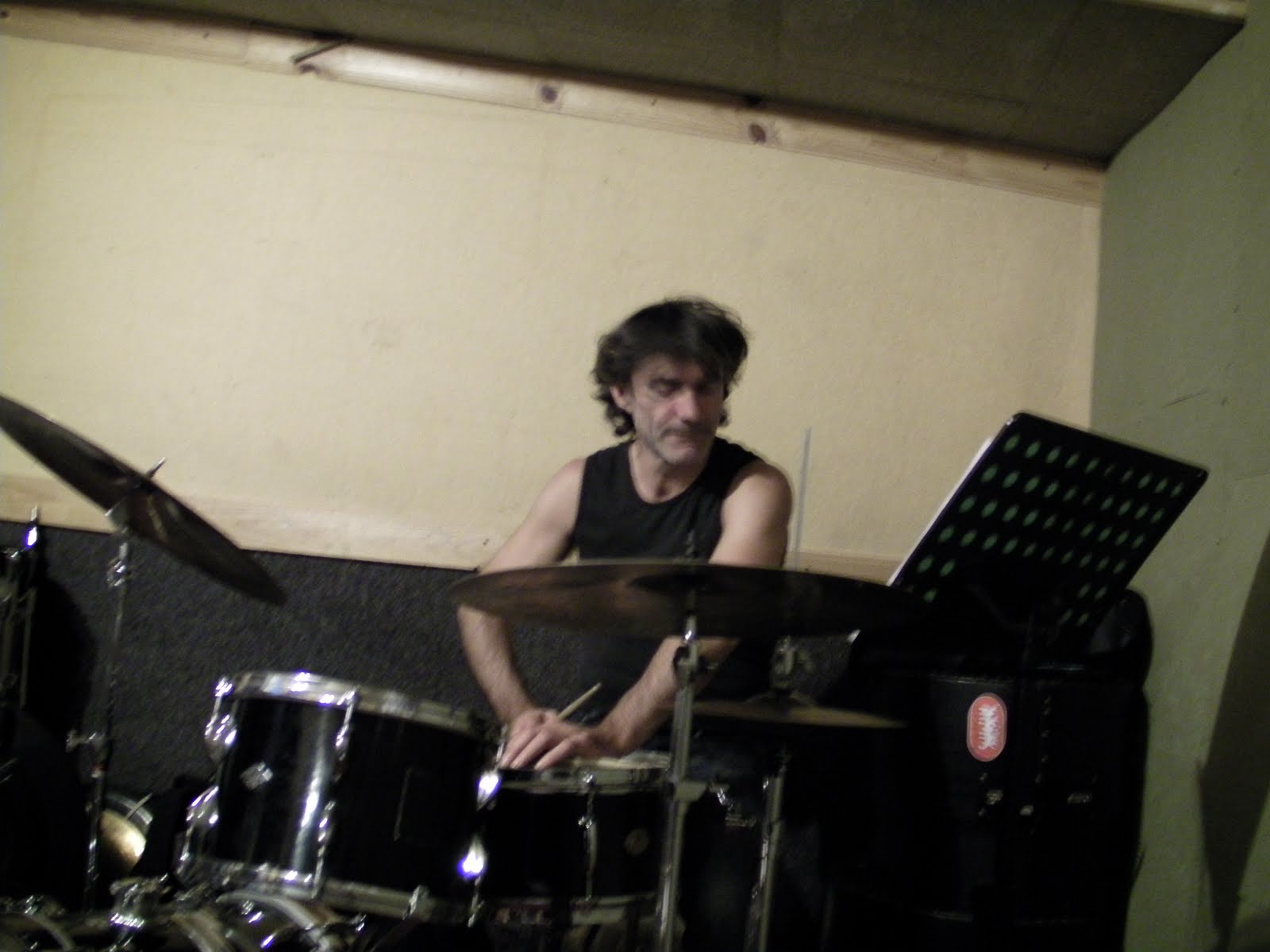
 (Pekka and Carlos at the studio)


We were recording in a studio in the engineer’s home – I like these kinds of environments, again they’re a bit different to the airless bunkers that often constitute studios these days. The engineer’s house was in a small town in the countryside and the whole scene was pleasant and conducive to relaxed but concentrated work. Where else but France could you take a break and have a lunch of Confit Duck in a local restaurant? We got all the tracks recorded that we hadn’t managed to get to in Basel, and we re-recorded a couple of others, and then we headed for Dammarie-Lès-Lys where we would be staying for the next few nights.


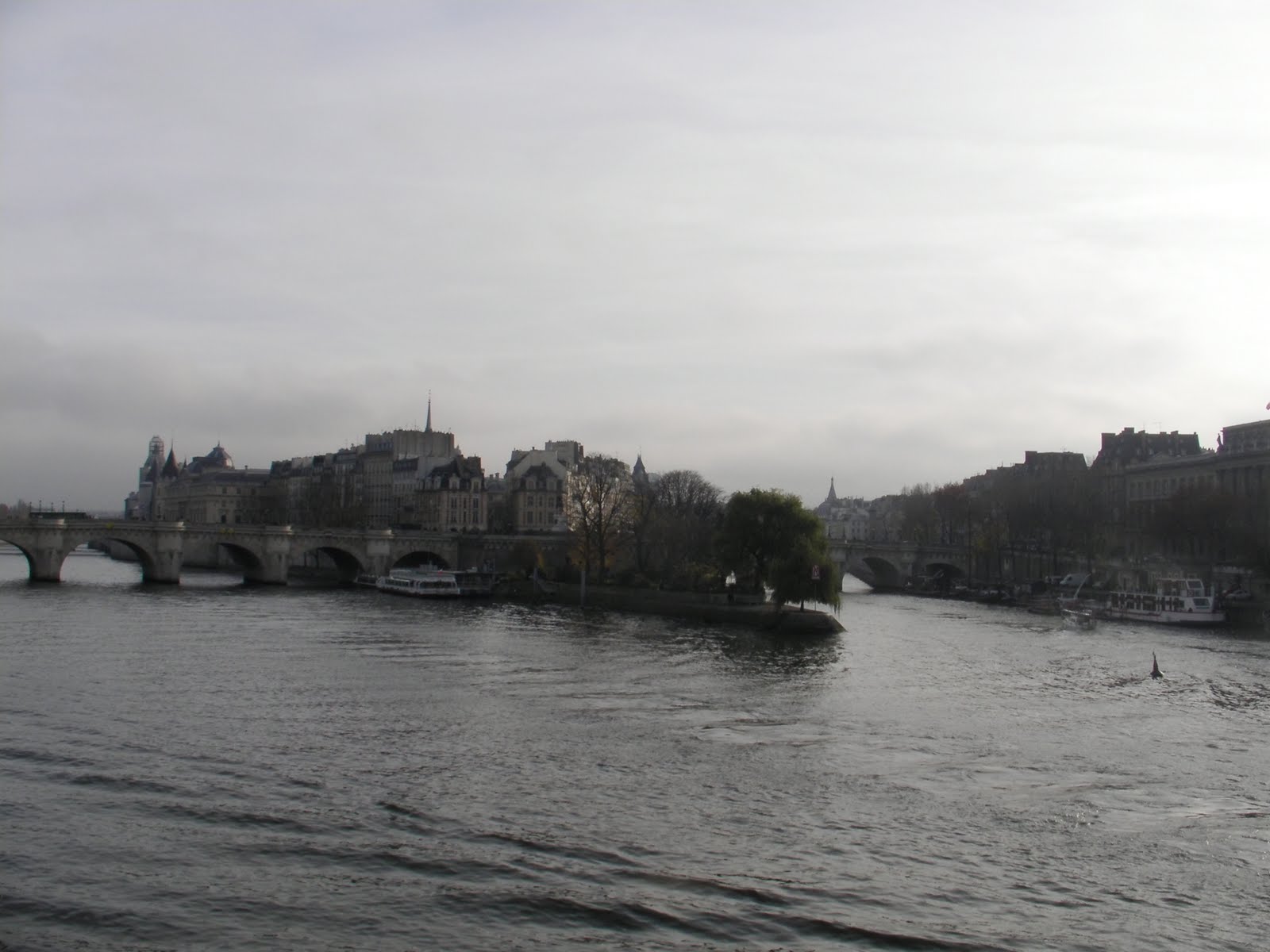
Dammerie is close to Paris, and we had a day off the next day so it was a foregone conclusion that we would head into town at some point. And what a perfect day for a trip to Paris it was! A beautiful late Autumn day, bright sunshine – it was almost like being on the film set of one of those Hymn-to-Paris movies that Woody Allen makes. Carlos and Greg went in earlier and went around the Louvre, (Carlos commented that his smile is more mysterious than that of La Giaconda – see below and decide for yourself….), Pekka and I headed in during the late afternoon and we met up with the guys, walked around in the sunshine along the Seine, and had a delicious and very good value dinner in a great traditional Bistro, before heading back to our hotel in Dammarie. Sometimes being a musician IS glamorous! Or at least lots of fun………

(Carlos enters a smiling competition with the Mona Lisa)


The reason we were in Dammerie was because of its proximity to CMDL – the school of Didier Lockwood, where we did a combined workshop and concert performance. The school is in a lovely setting and has a student body of around 100, which is a perfect size in my opinion – big enough to be interesting, but not too big to become impersonal. I got together with the bassists, and we discussed various bass related issues, but also musical issues in the wider sense. When you get together with a group of students whom you haven’t met before, and you only have an hour, it’s hard to get into much concrete information, since by the time you know what it is they wish to work on with you, the time is almost up. But they were a very receptive group, we managed to get into some interesting stuff, and a good time was had by all.


After the workshop we played a concert for the students for about an hour – really fun, because at this point we really knew the music and were able to get into it immediately and explore it more fully at the same time. This was our last gig on this leg of the tour, so it had the usual bittersweet flavor that these last gigs on tours always have.

To give you an idea of some of the music we played, here's a recording of a piece of mine called 'Traditional', recorded live at the Bird's Eye club on the second night of the tour.


(Greg, Pekka, Carlos and I, outside the Bird's Eye Club in Basel)

 So that was that – some travelling, lots of music, lots of new music recorded, and lots of good food! I left the next morning to go back to Dublin to change my clothes re-pack my bags, and head off for the second leg of the tour – Japan!


Tuesday, 10 April 2012

A Week in India with George and Carlos


An account of our recent trip to Mumbai and Delhi and some thoughts thereon

Being awoken by the Muezzin’s call to prayer at 5.30 am suggests to my sleep-drugged mind that I’m in a different place. Waking up several hours later to see a hawk fly past my window in the hot sunlight confirms it. I’m in Mumbai, for the first time in fifteen years, with my good friends and great musicians George Kontrafouris and Carlos Ezequiel. This my sixth time in India, and it’s one of my favourite places on earth – the food, the people, the colour, the intensity, the sheer difference of it, make it an extraordinary place to visit, and I’m always glad to be back.

Apart from anything else, India always affords one the kind of good natured, yet baffling conversations that a seemingly simple request can generate. Like this morning when I went into the hotel coffee shop to get a coffee and something sweet.

Waiter: Good morning sir

Me: Good morning – could I have a coffee and something sweet – anything.

Waiter: A coffee sir?

Me: Yes, a coffee – and something sweet to go with it

Waiter: A sweet coffee sir?

Me: No, a coffee, and something like a biscuit or a cake or something

Waiter: Ah – a coffee with sugar sir!

Me: No, a coffee and something sweet to go with it

Waiter: Just a moment sir – (consulting a folder) what is your room number?

Me: 405

Waiter: But there is no booking for lunch for 405 sir

Me: I don’t want lunch, just a coffee and something sweet to go with it

Waiter: (With a baffled expression….) Just a moment sir.

He goes off and comes back with three more people, all consult in Hindi while looking at booking folder

2nd Waiter: You want lunch sir?

And off we go again…………

Eventually it gets sorted out and a coffee and some biscuits are produced, but every time I’ve been in India I get involved in these kinds of conversations regarding seemingly simple things, but in which both sided become increasingly baffled.

Having all made long journeys to get here, we take it easy on the first day, rest a lot and then go and see the Gateway of India, Mumbai’s famous monument and tourist trap, braving the touts, admiring the sea view and watching the throngs of happy Indians enjoying their Sunday off. The day finishes satisfactorily with a visit to a renowned North Indian restaurant for expensive, (by Indian standards), but delicious food.


The next day’s plan to head out on a trio excursion is stymied by George being sick. Not very sick but sick enough to make him a non-starter for the trip so Carlos and I go on a truncated version, starting with the extraordinary Mumbai Railway Station, built by the British and showing every sign of Victorian confidence in Queen and Empire. It’s a large building, and inside, a fascinating throng move endlessly through the station, each person intent on their own mission, but the whole looking like some giant organism, eddying and flowing to and fro. All main railways stations are hives of activity, but Indian ones are even more so – India Rail employs 1.3 million employees making them the one of the largest employers of human beings in the world. Whole support systems spring up around the stations, including families who live there. It’s an extraordinary scene – chaotic yet ordered.

To walk around the city is to be reminded again and again that the words ‘health and safety’ do not mean much to Indian society at large. Walking out on the street you can witness dozens of acts of hair-raising recklessness within minutes. Cars make U-turns with no warning, bicycles dash between buses and trucks, pedestrians walk straight into oncoming traffic, pillion passengers on motor scooters carry huge unsafe loads, families of 5 squeeze onto a Honda 50, people in cars balance two children on their knees in the front seat. To witness street life in Mumbai, (or pretty much any Indian city) is to watch a seething maelstrom of potential accidents.

And accidents DO happen – all the time. Yet the newspapers seem much more interested in the antics of teenagers, and the machinations of the Pakistanis than they do on the everyday carnage on the streets. For example, while I was in Mumbai the papers were full of an incident in which 6 teenagers crashed their car and one was killed. There followed four days of newspaper articles, much hand-wringing over the state of the nation’s youth, police promises to crackdown on bars selling alcohol etc. – yet in the same newspaper there was an article about the railways in which it was casually mentioned that 195 people had been killed on Mumbai’s railway network in January and February. 195 people killed in 8 weeks! That’s three per day…….


Over 1500 people were killed on Mumbai’s railways last year (mostly run over on the tracks), and yet the media were much more interested in this one car crash in which one person had been killed. Why? Probably because most of the people who died on the railways were poor and the teenagers were from the burgeoning middle class. But any society that accepts that level of carnage on its rail networks is one in which the idea of personal safety is not a priority.

I must admit that on one level I enjoy the madness on the streets – it’s street theatre writ large, you can stand on any street corner and see something amazing, startling and visibly arresting at any time. On the other hand there’s no doubt that this chaotic panorama that give Indian cities their unique visual impact, does come at a great cost to many people.

Carlos and I leave the railway station, take a wrong turn and instead of gazing at Mumbai’s Victorian architectural heritage, end up instead in a seething street market in Mohammed Ali Road, a Muslim area of the city. Although it presents us with another amazing tableau of Indian city life, the cacophony of car horns, dust, 35 degree heat, and sheer press of humanity drives us to seek air-conditioned shelter in a local restaurant where I have a refreshing dish of Khir (cold rice pudding), washed down with a Coke. We then take a taxi down to the Victorian section of the city, have a look around have a brief lunch and head back to the hotel. Fortunately George has now recovered and we eat in an excellent Hyderabadi restaurant attached to the hotel. Hyderabadi food should be much better known in the west than it is. In Europe and the US Indian restaurants are dominated by the same North Indian staples, which though good, don’t come close to representing the culinary diversity of India. Hyderabadi food is rich, but generally spicier than North Indian food, and with all kinds of different dishes which were developed during the Nizam period.

The next day, after a morning trip to Chowpatty Beach, we undertake the first performance at the Blue Frog. The Blue Frog is a very modern club that is breaking new musical ground in India – it’s very well equipped and has a lot of western music - mostly various offshoots of modern pop music, hip-hop, electronica etc. – 7 nights a week. Emmanuelle, the artistic director, once worked in Dublin for the Improvised Music Company, and I’d used that contact to make the initial connection. Emmanuelle made it clear to me at the beginning of our discussions that there was no point in playing acoustic jazz for a quiet listening audience there, since this audience didn’t really exist in India. So we arranged a programme of more funk oriented music which was still fun to play, but which we hoped would appeal more to local tastes.


(The Blue Frog, Mumbai)

The gear was fine, though Carlos had to re-skin the drums, and the sound guys were very good – they got a good sound very quickly, if only all sound engineers were like that……..


So, decent gear, good sound, appropriate music everything was set for a fun gig that night, but…………. Unfortunately the audience was terrible! There was a decent crowd of people in, but they had absolutely no interest in the music whatsoever, treated the whole event as a social evening, played with their iPhones, talked incessantly and some even stood with their backs to us. Each piece was greeted with lukewarm applause, some people seemed startled by the applause, and looked over their shoulders to see what was being applauded, as if surprised that the music wasn’t just coming from a hi-fi system.

I hadn’t expected much in the way of audience appreciation – I know jazz is an unknown quantity in India – but I must admit to feeling irritated by the audience. They’d paid a lot of money by Indian standards to come into the gig and no doubt felt they were cool and hip people by virtue of being in a place like the Blue Frog, but in the end their complete lack of appreciation for the music belied their self-bestowed hipness. I’m not saying that anyone who doesn’t like our music is unhip per se, but what bothered me wasn’t that they didn’t like the music, it was because they clearly had no interest in ANY music – it fulfilled that dreaded ‘lifestyle’ category, along with the iPhones and designer sunglasses and designer clothes. Anybody could have been up there on the stage – good or bad they would have all got the same reaction, whether they played well or not.

But we had fun playing for ourselves at least, and the Blue Frog people looked after us very well and that’s always nice. The next morning we set off for Delhi, for the second gig.


(At the Blue Frog, Delhi)

Delhi’s traffic seems almost worse than Mumbai’s , hard though that is to believe, and the hotel was on the edge of a busy road with traffic roaring past. But the hotel itself was very nice, rooms were great and the food in it was great. I really thought we’d found a gem of a place and made a mental note of it for future reference and trips to Delhi. I was later to be sadly disillusioned about the place, but for now we were very happy to be there.

Off to soundcheck at the Delhi branch of the Blue Frog, and it’s a similar looking place, with again very good equipment and nice and efficient people running the place. Carlos did a bit of surgery on the drums (as in taking the foam padding out of the bass drum so he could get a sound out of it), George figured out the idiosyncrasies of the keyboard, and I was very happy with a Markbass stack – I’d been using Markbass amps at home and to get one here was a great bonus.

The gig that night was a lot better, there were more musicians there and the audience was far more attentive, and consequently we played better too. We chatted afterwards to several musicians had a post-gig drink and went back to the hotel very satisfied with ourselves.


(George at the Red Fort)

We had a day off the next day and we filled it by paying a visit to the Red Fort – a Moghul Palace, still in great condition – a trip to Chandni Chowk, the extraordinary market in Old Delhi, and finally a visit to the Nizamuddin Dagar, a Sufi shrine.

The Red Fort was impressive, although I always find that once you’ve gaped at the huge and beautiful red sandstone walls, its a bit lifeless , and there’s not a lot more to see. Chandni Chowk on the other hand is bursting with things to see – cycle rickshaw guys carrying impossible loads, hawkers shouting and importuning, food sellers on the side of the street doing a roaring trade in Jallebis and Puris, shops selling everything from Pashminas to rifles, Sikh temples and mosque etc. etc. – all human life is there, and I always go to the Chowk every time I visit Delhi.

Here's a few minutes of footage from the Chowk, to give you a flavour of the scene......


We finish with a visit to the Nizamuddin Dargah, a famous shrine of a Sufi saint where the faithful come to pray and ask the saint to intercede on their behalf. On Thursdays, at sunset, the Qawallis – a group of singers and musicians who sing at these shrines, (the most famous of which would be the late great Nusrat Fateh Ali Khan) – sing their devotional songs beside the tomb of the saint and we were determined to see this. I’d seen Qawalli music before but always in concert halls, never in its proper setting.


(Qawalli Singers at the Nizamuddin Dargah)


The scene was extraordinary – thousands of people, many dressed in colourful garb, from many parts of the Muslim world, all worshipping at the shrine, but also buying food, buying offerings for the saint’s tomb, and surrounding the Qawalls as they sing their devotional songs. There’s a huge crush and constant movement. From a musical point of view (or at least my musical point of view) it’s a disappointment in that the noise of the crowd is so great, I can’t hear the musicians well at all. But although it’s disappointing musically, the scene itself is fantastic – it really felt like a privilege to see it.

Unfortunately the evening was to end on a sour note – I had my pocket picked on the way out and had my wallet taken…….. We were putting on our shoes and there was a small group of boys poking at us and begging, and it was in this melee that they managed to take the wallet. I realized immediately it was gone, but it was too late to do anything about it. We went back to the hotel to cancel my credit cards when we went back to the hotel to cancel the cards etc. the desk clerk wouldn't give me a key card to get back into my room until we paid him 300 rupees as a 'lost card charge'. The fact that I'd been robbed and had no money didn't make any difference to him, so I had to borrow the money just in order to get back into my room. That hotel is very nice, lovely rooms etc. - but I couldn't believe the lack of sympathy and customer service they showed in dealing with this. So beware this hotel – it looks good, but the management are a bunch of grasping sods. The name of the hotel is Saket27.

But although this was a bad way to end the trip, the whole thing was another great Indian adventure. India never lets you down – it’s always spectacular, and extreme, and intriguing, and annoying, and exasperating, and hilarious, and thought-provoking and many more things. This was my 6th time there – can’t wait for the 7th!


(The Last Supper!)

Saturday, 10 December 2011

A Musical Week in Paris


‘Paris! Paree! What pictures of gaiety those two cities conjure up..........’ As Spike Milligan said – and he was right, at least about the city conjuring many images. Paris is truly a great city and probably the city with the most stereotypes applied to it – but as is so often the case, there are kernels of truth in the Parisian stereotypes, it is a physically beautiful city, it has lots of art and culture in it, it is full of great food. I’ve always enjoyed being there and is probably the city I’ve visited the most over the years, both as a musician and also simply being a tourist. Recently I got an opportunity to spend a musical week there involving three different activities, teaching, rehearsing and performing – an opportunity I grabbed with both hands.

Sometimes things work out really well and this opportunity to visit Paris was one of those times – the great bassist and head of the jazz programme at the Paris Conservatoire Riccardo Del Fra contacted me and asked me to to come and teach at the Conservatoire for three days, and then shortly after that I got a call from the wonderful Sheila Pratshke, director of the Centre Culturel Irlandais asking me would I be interested in performing at the Jazzy Colors Festival in Paris towards the end of the same week. Taking advantage of being there for these two events, I managed to hook up a third, a long-discussed chance to try out some new music with three great French musicians – the altoist Stéphane Payen, the violinist Dominique Pifarély and the drummer Christophe Lavergne.

But first up was the three-day stint at the Conservatoire – I arrived on a Sunday and had a fantastic dinner courtesy of Riccardo at the Au Boeuf Couronné, one of the last restaurants remaining from the era when the area (which includes the Conservatoire) was the main meat market of Paris. Needless to say they specialise in meat, and equally needless to say they really know how to prepare and serve it. A wonderful meal with good company and a great, and very Parisian way to start the week.


And a fun three days with the students it was too. As one would expect from such a famous school, the playing level of the students is very high. I was working with students from both the BA and Masters programmes, and all of them were very good, all playing at an international professional level (at least technically), and a pleasure to work with. The nice thing about working with young musicians who play at this level is that you can really talk about interesting conceptual and aesthetic things instead of just technical issues. I was there principally to do my rhythm thing – talking about how to develop your rhythmic technique, your time, odd metres, metric modulation etc. etc. - the thing I’ve been doing for years now and am perhaps best known for. So we did some work on that and I gave them some exercises for working with rhythm that are both very simple and also very difficult to do well. There’s a big difference between simple and easy, and often the simplest things are the hardest, (try playing a REALLY slow walking bass line over changes!). If your rhythm in general, and time-feel in particular, is not good, then even if you can play Giant Steps in every key at 360BPM, you’ll still sound terrible.


(At the Conservatoire, if you were ever in any doubt as to the fact that you are in a heavyweight classical school, the names of the rooms will soon set you straight....)


But apart from talking to the students about rhythm we also got to talk a lot about the ‘why’ of what we do. I feel that jazz schools tend to spend their entire focus on how to do everything, but rarely discuss the whys – why should be play this music? Is it important to play this music? If so, to whom? Us? Society? What artistic responsibility do we have? What are we trying to express? Is it important to be different? Should we be trying to innovate? What is our relationship to the audience? Do we have a responsibility to them, or is our primary artistic responsibility to ourselves? What should we be thinking about when the inevitable decision has to be made between playing this music or moving into a more commercial area of the business?

This kind of philosophical discussion is an important one to have with young musicians and particularly important when you’re talking to very talented and highly skilled musicians such as the ones I was working with in the Conservatoire, who are on the cusp of becoming professionals. The students were not only fine players, but great too in terms of their personal attitude, and we had a very nice time working together over the period I was there.


On the Monday I got a Facebook message from my friend Marcelo Coelho in Brazil – I had posted the fact that I was in Paris on FB, and he wrote to let me know that the unique Hermeto Pascoal would be playing in Paris that night. Sometimes the internet is really an amazing invention – a Brazilian guy in Sao Paulo sends a message to an Irish guy who happens to be in Paris for a few days to let him know that there’s a concert he really should go an see while there. You get used to the internet but every now and again you (or at least I) shake your head at the extraordinary things it can do!


So, tickets bought courtesy of Stéphane, he and I set off to see Hermeto that evening. Hermeto was playing at the renowned New Morning club with his ‘Grupo’ a band consisting of a saxophonist, bassist (the great Itabere Zwarg), percussionist, drummer, vocalist, and Hermeto himself on various instruments. As always, the guy is a phenomenon – if you don’t know his music (and you should!), I can say that’s it totally unique, complex yet joyous, brilliantly structured, with a unique sense of harmony, great sing-able melodies and killer rhythms, derived from Brazilian music yet rarely conventional. If you want to hear the kind of thing we heard have a listen to this

This was the second time I’d seen Hermeto and though his genius is undiminished (he did a call/response thing with the audience of over a set of moving changes that was unbelievable in terms of his ability to hear ahead and know what was going to work over the upcoming changes by the time the audience was singing their part), I did notice that he played much less than normal, only took a couple of solos and when he played those solos, the formerly fearsome technique had become ragged. So I’m not sure if he just wasn’t well that night, or whether it’s more a thing related with his age (he is 75 after all!), but it was strange to see this musical dynamo be quite subdued, by his standards at least. But still, the music was fantastic, the band was killing and vibe was as always, joyful and wonderful – I always feel that when you see Hermeto, you’re seeing music the way it should be played, as part of the life-force.


Three very satisfying days at the Conservatoire and then it was on to the next part of the trip – putting together some new music with Stéphane, Dominique and Christophe. Stéphane, Christophe and I had played before and enjoyed the experience very much, and I had played a couple of times with Dominique in a project called Simulacrum a few years previously. I had talked frequently with both Christophe and Dominique about playing together again and my stay in Paris gave us the opportunity to do this.

The music was written by Stéphane and I, and we were just trying out material to see what would work, with a view to developing it further later. It's such a luxury to be able to spend time playing through music without having a specific performance in mind - you can try things out, change things, develop things and have the luxury of time - the one commodity (apart from money...) that's in really short supply in the professional music world.

Stéphane's music and mine is quite different, but compatible. The one common denominator that both musics would have is the extensive use of rhythm as compositional and improvisational devices. Stéphane's pieces tend to be shorter than mine but each section of his pieces usually are capable of being played in several different ways and the music evolves through these variants. Mine tend to be longer and maybe more prescriptive in terms of what goes on - or at least the order of what goes on. But I think the music we both write complement each other and you can hear that we both operate in a similar musical aesthetic. As I mentioned previously Stéphane, Christophe and I had played as a trio before but adding the violin gave the music a whole other sound - the blending of the alto and violin creates a very nice sound, light and flexible. And Dominique is such a great player, easily able to negotiate the rhythmic complexities of the music and immediately understands the conceptual ideas underpinning the pieces.


(Christophe Lavergne)


We rehearsed in an industrial space that some Parisian musicians rent between them - a great idea to have a space like that where you can go and rehearse whenever you need to. So, we worked on the music over a two day period and got a good feeling as to how we could progress it - that was the easy part,now for the more difficult one - getting some gigs and recording!


We don't have any recordings yet of the quartet but here is an example of the trio in action from a couple of years ago......... For music by the quartet - watch this space!


So, the final act in this musical week was the concert at the Irish cultural centre, and on Friday the members of my own group - Michael, Matt and Chris - arrived. I met up with them after the final rehearsal with my French colleagues and we went out for dinner, enjoying the vibrant Parisian eating-out-on-a-Friday vibe. Earlier we'd had a look at the room we'd be playing in and decided that there was no need to get everything set up until late on the following afternoon, which meant a free morning to have a walk around Paris and enjoy the atmosphere and take in the physical beauty of the city. This we duly did, walking around the St Germain district (which,it being November, wasn't too crowded with tourists), and even spending some time in Notre Dame - something I'd never done before even though I've been in Paris so many times.


Chris, Matt and Michael take in the sights.......


The gig that evening was in the Centre, a beautiful building which has a history going back hundreds of years.


I'd played here a couple of times before, in duo with Stéphane and also with the amazing Nguyen Le. It's a wonderful place to play - right in the middle of Paris (near the Pantheon) yet has a tranquil almost isolated feeling. The Centre hosts artists of various kinds, mostly Irish, doing residencies in Paris and there are certainly worse spots you could be in....


And worse places to play too! This gig was far from the poky over-priced Parisian jazz club-type venue - it was in a very nice room at the Centre that had previously hosted an art exhibition. We had to do the usual checking of the acoustic to make sure it wasn't too reverberant and we were pleasantly surprised by the warmth of the sound - often these old buildings can be a bit cavernous and boomy. We did a quick check of the sound, went back to our rooms to change (what a luxury to be staying in the same place we were playing..) and then it was time to play.

And unusually for a jazz gig these days, it was packed. So packed that they had to bring in extra seating - usually they're taking the seating out! So it was really nice to play to a full house and an appreciative audience. The music went well too - we'd done a few warm-up gigs in Dublin in the preceding weeks and this really helped with knowing the music and being able it confidently and feel loose and creative. The audience were terrific, the sound had changed a lot since the soundcheck (it's amazing how much different full room sounds in comparison to an empty one), and we had to alter things a little, but once we got that going everything was fine and we, and I think the audience, had a lot of fun.

Here's our last piece from the evening - a piece of mine (very) loosely based on Scrapple from the Apple'


We played one long set, plus an encore, packed up our stuff and headed out for a late dinner - more great food, more great company.

And that was it - a great week for me, lots of good music, working with talented students, seeing one of music's great geniuses live again, exploring new music with wonderful musicians, playing with my own band to a full house, lots of good food, some great conversations........... Sometimes being a musician can be OK.

Here's to the next time......

Sunday, 30 October 2011

On The Road with Lieb


It’s been my privilege to know Dave Liebman for over twenty five years. Of course I’ve known him from his recordings long before that - ‘Lookout Farm’ on the Horizon label, the legendary burning and swinging solo on ‘I Concentrate On You’ from The Opal Hearted Aborigine, his passionate and intelligent playing on Steve Swallow’s “Home” album, and the incendiary playing on Elvin’s ‘Live At The Lighthouse’. Of course he was also well known for his work with Miles, but I didn’t get to know those recordings till later. I first met him in person when I attended the Banff Jazz Workshop as a student in 1986. Dave was a member of an extraordinary faculty that was led by Dave Holland, and he made a huge impression on me as a teacher, a philosopher about the music and life, and was (and is), the embodiment of someone who has devoted their lives to the playing and teaching of jazz, and of living a life at the highest level of creative music.

I got to know Dave at the workshop and I played with him for the first time the following year, (a memorable gig with Sonny Fortune, Richie Beirach and Billy Hart, with me hanging on for dear life!), and recorded with him for the first time in 1989 with the Guilfoyle/Nielsen Trio, a group that developed a long term playing relationship with Dave and with whom we toured in Europe and Australia and made two recordings. Since then I’ve played with Dave on many occasions, recorded with him, taught with him, worked with him on the International Association of Schools of Jazz annual meeting, got to know his great family, and generally hung out with him and discussed life, music, and the universe on innumerable occasions. So it was with great pleasure that I welcomed him back to Ireland for a short tour this past October – this is an account of what we did........


The tour was built around three trio gigs, with the addition of the great young Finnish drummer Jussi Lehtonen. I was lucky to get Jussi, he had come in at quite short notice when the original drummer (who shall be nameless) did the unpardonable thing of double-booking himself, leaving me with a headache as how to get a suitable drummer at such short notice, and him (the original drummer) with the reality of never being called again.......

I had played with Jussi before and always enjoyed it, and we had recently hooked up again briefly at the IASJ Meeting in Sao Paulo and had fun playing. And I knew Jussi’s great feel, intensity and sense of spontaneity would be ideal for this gig. Because this gig was based around open playing – I hesitate to use the term ‘free playing’ because like any musical term to describe a style of playing it can have so many different meanings to different people. I’d done this type of thing with Dave before with different drummers (Jim Black, Tom Rainey, Nasheet Waits a.o.) and it’s always been so much fun. It was Dave’s idea – he’d heard me play some of my original music, which involved a lot of complex rhythmic elements, and had suggested playing in trio with that complex rhythmic vibe, but no pre-arranged music – free but rhythmic. ‘I want to play that hula-dula shit, but I don’t want to rehearse!’ was Dave’s hilarious and memorable phrase when he made the initial suggestion. So that was the (very loose) plan for the gigs.

Dave arrived early from NY, I picked him up at the airport, drove to the hotel, he checked in and then we hung out for a while catching up – Lieb has amazing energy and stamina – there he was after a transatlantic flight, and despite having a full schedule ahead of him, choosing to hang and chew the fat rather than go striaght to bed and rest. Eventually he went to bed and later I picked him up, we had lunch and then he did a saxophone masterclass at the school before we headed off for the soundcheck at Whelan’s - a famous Dublin live music venue where I’d played with Dave several times before. So many soundchecks these days become surrogate rehearsals due to the lack of proper rehearsal time before the gigs – but because of the format we’d be playing in there was nothing to rehearse – a very liberating feeling. Tom Rainey once said to me that the four most important words at a soundcheck are ‘sounds great, let’s eat’ - and this was one of those mercifully quick soundchecks.

The gig itself was packed and was musically great. In some jazz quarters playing open or ‘free’ is still considered to be a cop-out, as if it’s easier somehow than playing changes. But playing good music has everything to do with imagination, creativity, experience and attitude and nothing to do with the format you choose to express yourself in. Playing open is hard – to do it well and make good music you have to be listening all the time and creating your own structures in real time. When you’re playing changes (which is not easy either....) you at least have the song form as a prefabricated structure to base your improvisations on – with open playing those structures have to be put together on the spot.

For me, I find this kind of playing calls upon certain aspects of my decision making processes that are not called into play as much in song-form playing. You’re constantly called upon to decide when to play and when not to play, when to go with the flow of the others or when to go in the opposite direction, when to follow and when to lead, when to start something and when to let somebody else start something, when to reinforce the direction and vibe of what’s going on and when to suggest possible other directions and vibes. Everyone in the band needs to have this decision making ability and be open to both leading and following, directing and complementing. Just having one guy in the band who is not in sympathy with this concept will destroy the whole thing. But on this occasion, with this group of musicians, everyone was on the same page aesthetically and so the music took off from the word go.


Myself, Michael Buckley (flute), and Jussi Lehtonen at Whelan's

We played the first set in the trio format, and then in the second set Dave invited two musicians to join us – the saxophonist Michael Buckley, and my son Chris, who’s a guitarist. Michael is a really great saxophonist and has played with Lieb before – he makes a perfect foil for Dave, has a fantastic sense of when to play and when not to, plays the shit out of the horn (to use a technical term), and is a wonderful improviser. He’s also that very rare animal – a truly great jazz flute player. Dave always enjoys playing with him, has taken him on tour with him, and always invites him to sit in whenever he plays in Dublin.

Chris is just starting out in the professional jazz world, though of course he’s been around the music all his life and is now starting to make his way on the scene. He spent a week in August with Dave at his chromatic harmony workshop and Lieb invited him to sit in on the Dublin gig. I was confident that he’d be OK being thrown in at the deep end like this – I knew how he plays, and also knew that Lieb wouldn’t invite him to play unless he felt he was ready for it. And the music turned out even better than expected, with the five of us really gelling from the word go – here’s a flavour of it, taken from the last section of the concert – a real, old fashioned improvised burn-out!


The next day featured a workshop at the school and a very different kind of concert. The concert took the form of a talk by Dave on his time with Miles – this year is the 20th anniversary of the death of Miles and I took the opportunity to set up an evening where Dave would talk about his experiences with Miles in a kind of illustrated lecture – I’d seen Dave do a similar thing on Coltrane a few years earlier and knew he was an entertaining and erudite public speaker, well capable of communicating with members of the general public, towards whom this event was aimed. The music would be provided by Dave playing with Trilogue, my improvising chamber trio featuring two wonderful musicians – the vocalist Sarah Buechi and the pianist
Izumi Kimura


I had done two arrangements – one of ‘Blue in Green’ with seriously altered harmony (in tribute to Dave’s ground breaking work in this area), and ‘Half Nelson’ a piece from the 50s with similar changes to ‘Ladybird’. I radically altered this piece so that the changes would only occur at the end, before that the improv was based off fragments of the melody and allowed Sarah and Izumi to do duo improvisations with Dave, before he and I took over and played the changes and took the head out in conventional manner. We ran the pieces down and Lieb suggested a few changes to my arrangements, all of which worked, and we knew it would be fine. But before the gig Dave had another thing to do – a workshop for the teachers at my school.

Usually workshops and clinics are always aimed at students, but I think it’s a great idea to occasionally have pedagogical workshops that give the teachers something to think and talk about. And there’s nobody more qualified to talk about pedagogy than Dave who’s both a great teacher and also a great believer in the importance of jazz education. He’s the founder and Artistic Director of the International Association of Schools of Jazz and a real force in education. So who better to talk to the teachers than him? It was a very valuable experience for all concerned – Lieb covered many different topics about the philosophy of education, too many to go into here, but here’s a flavour of it – in this clip Dave is talking about the importance of keeping in mind the beauty and mystery of music when teaching.


Dave Liebman talks about teaching by NewparkMusic


From there to the gig at the National Concert Hall - a very different venue to Whelan’s where we’d played the night before..... The audience was very different too, the Whelan’s audience had a high quotient of students and hardcore jazz fans, the Miles talk had an older audience with a higher quotient of ‘civilians’ than the night before. Some footage of Dave playing with Miles was shown and Lieb gave a very entertaining talk full of good anecdotes and insights, and the music went well, we even spontaneously added in another duo piece - “Nardis’ - with Dave on piano.

The following morning there was time for one more workshop, this time for the students, before heading off to Limerick. We had almost the entire student body there and Dave gave them an inspiring talk that covered a lot of areas – practice, transcription, seriousness of purpose etc. all peppered with great anecdotes calculated to both inspire and entertain. It was a typical Lieb call to arms for the jazz army, and the students set off from the workshop with a new sense of purpose while we set off for Limerick with a sense of purpose of our own!

After the Whelan’s performance Lieb invited Chris to join us for the rest of the tour, so we set off for Limerick as a quartet. As any working musician can attest to, travelling can be a drag, but, as I’m sure they can also attest to, it also gives you a chance to to listen to music, talk about music, and life, the universe and everything... And this we duly did as we drove around Ireland over the next couple of days. Lieb is really fun to travel with in this regard because he of course has so many stories and anecdotes, but he’s also interested in your stories and is incredibly opinionated and argumentative – but in the best possible way. Opinions are strongly (and very humorously) expressed, but differing opinions are given due consideration too. I’m quite opinionated and argumentative myself, so we had a great time chewing the fat, batting opinions back and forth, arguing, discussing, listening to music.

We talked about so many things – speculating on how the Coltrane/Elvin saxophone and drum thing originated, (did it just happen one night and they kept it and developed it, or was it discussed and tried out as a preconceived idea?), how one measures whether one has made a positive impact on the world or whether one hasn’t, music collectives (including a great anecdote about the setting up of Free Life Communication the music collective Dave and many other now famous musicians were involved with in the 70s), some Elvin and Miles stories, and a hilarious, passionate, and outraged rant from Dave about a recent experience he’d had with a ‘name’ player who ‘absolutely-could-not-play!!!’ And I’m sorry, but there’s no way I’m going to tell you who that was – ‘what goes on the road stays on the road’, it’s like the seal of the confessional.........

Limerick is the third largest city in Ireland and were were playing for the Limerick Jazz Society a great organisation that’s been putting on jazz concerts in the city for over 20 years. Ireland is a small country and jazz is a minority music so it’s tough to promote the music and put on concerts and all of that, but LJS have been indefatigable stalwarts in promoting the music, have developed an audience, and it’s always a pleasure to play there. On this occasion John Daly – drummer and one of the leading lights in the LJS – has arranged for Dave to do a workshop before the gig for a group of people who attend jazz workshops organised by the LJS. This is a very different audience from the full-time student one Dave had at Newpark that morning – these were adults who are studying the music on a part-time basis and it was fascinating to watch Lieb seamlessly tailor his approach to the situation. We opened the proceedings by playing ‘Autumn Leaves’ and then Dave took questions and everything went well, with Dave, as is his wont, being both informative and entertaining.


Lieb talks jazz at the LJS

A quick dinner (a great thing about the venue - Dolan's - is that they serve very good food downstairs) and then the gig. It's a very guitaristic night this night because in the second set we were joined by Joe O Callaghan, a great guitarist with whom I’ve worked many times before, and who played with me the last time Lieb came to ireland in 2007. So between Joe and Chris the set is very guitar-heavy, but lots of fun to play because the vibe is completely different to the Whelan’s gig. The sonic landscape is very dense, but both guitarists play differently enough to make it interesting and Joe plays one extraordinary intro to a tune in duo with Lieb – completely improvised (as is all the music of course) but feeling like they had worked everything out in advance, so nuanced was the interplay......Jussi was completely grooving, creative and generally killing – again.

The next day we head off to Cork, Ireland’s second largest city, home of Ireland’s biggest jazz festival, but more importantly for Irish jazz musicians, the home of the Triskel Arts Centre, one of the best venues in which to play creative music in Ireland. I’ve always had a good time playing there and have played so many great gigs with great players over the years, including several there with Dave. But this time there’s a new element involved, they have a new auditorium, much admired anecdotally, but this is the first time for me to see it in person. And it’s beautiful! A converted church with state of art sound equipment and great sight lines for the audience.


Triskel Arts Centre


The previous venue was small and very intimate, this is much bigger and impressive, but also has a consequently more reverberant acoustic – ‘Looks like we’re going to have to go ECM’ was Lieb’s half-joking remark, but contained in the humour is a core of pragmatism – the kind of burn-out stuff we did in Dublin, or guitar-heavy music we did in limerick, would never work in this space.

We soundchecked (including Dave trying out Jussi's cymbals and the Triskel's drums) and though the sound is different to the old auditorium, it's a pleasure to be working with the soundman Dennis again. Any musician will tell you that having a sound engineer who knows what he, (or she) is doing and knows how to amplify acoustic instruments and doesn't try and turn everything into a rock gig, is a pearl beyond price. And Dennis is one of those pearls! The soundcheck is quick and painless, a quick dinner at a nearby restaurant and then it's back to the gig.

The gig itself is very enjoyable - the different sound does discourage certain types of approaches, but encourages others that just wouldn't sound good in a drier acoustic. We play a lot more spacious music on this occasion and it's a pleasure to hear the sound of the instruments in that space. Included in the performance (as it is on all the gigs) is what we call a 'free ballad' - the idea being that we approach the piece as if we were playing a typical 'Lover Man' or 'Body and Soul' type ballad, but there are no pre-agreed changes or form. Ballad vibe and feel, but open - here's an excerpt from the very spacious and lyrical one we did at the Triskel:


And that was it - four days in which Dave did 3 gigs, 3 completely different workshops, one rehearsal, and a lecture/performance. Dave turned 65 this year, but he has the energy of somebody 30 years younger, always gives 110% in everything he does and of course is still one of the truly great jazz musicians around today. He's always been an inspiration and example for me, and of course for so many others over the years. I had a great time on the tour - here's to the next one!

Sunday, 24 July 2011

Sao Paulo - The IASJ Meeting (Part 2)


The second part of my report on the recent IASJ meeting in Sao Paulo in July 2011. For part one go here


Day 4

Today is a very Brazilian kind of day – it begins and ends with Choro.

Opening up the day we’re treated to an explanation and demonstration of Choro music by Pedro Ramos, one of the teachers at Souza Lima, our host school. Choro is a wonderful music typically played by at least two guitars (a small one called a Caviquinho, and a big 7-string guitar), one or more melody instruments (saxophone, clarinet, or flute usually) and Pandeiro – the Brazilian tambourine. It dates to the early part of the 20th Century and is sometimes described as Brazil’s Ragtime. It is full of counterpoint and the voice-leading prowess of a good Choro player is really something to behold – the 7-string guitar acts as a bass, but a constantly moving bass, playing wonderful obbligato lines underneath the melody. In fact the way the melody and accompaniment switch back and forth between the different instruments is in itself reminiscent (in terms of instrumental roles rather than sound) of traditional jazz. But the rhythms are unmistakably Brazilian, with that slightly behind, triplet-y samba so unique to the music of this country. Pedro also gave a handout that outlined the racial history of Brazil and how the very striking variety of races and skin colour that one sees in Brazil came about and how unique to Brazil that was.


(Pedro Ramos Group)

After we’ve all been uplifted by the Choro music we go to Masterclass again and this time Herbie Kopf takes the helm and has some great things to say about dealing with sound issues in venues of different types and also some very valuable stuff on practice techniques. The students weigh in with some great stuff too – questions and suggestions. This is exactly what IASJ Masterclasses are about – the sharing of ideas rather than stuff being handed down in a hierarchical way. In the afternoon, more student rehearsals and ongoing dialogues for the teachers, and then in the evening we go off to finish the day with the same music we started it with – Choro, and the legendary Ó Do Borogodó club.

Ó Do Borogodó is a unique place – small, very basic, with a tiny bar and space for maybe 100+ people, but it is THE place in Sao Paulo to go and hear Choro and other Brazilian music, and dance. Every time I’ve been to Sao Paulo I’ve come to this club, and every time it’s been great – the vibe is extraordinary. The gig starts at around 10.30, and it’s usually packed out. There are tables and chairs on the floor, but usually these gradually disappear as the dancers commandeer all available space and the music really gets going. The musicians sit behind a table, which acts both as something to place their drinks on and as a barrier to keep the dancers from actually falling on top of them! Another interesting thing is the age of the dancers – it’s totally mixed, with young and older people dancing together unselfconsciously – no age apartheid here!

And these musicians really work! Their first set will usually be almost 2 hours long, then they take a break and play for another two hours, finishing after 3am – it’s reminiscent of jazz in the old jazz club days in that respect. And the music has an insistent quality to it, where the intensity level gets raised over a period of time and just goes and goes. A singer will usually join them after a while and then the dancers really get going, singing along to the Anthemic choruses of these songs and just having a great time. What amazes me about this place is that it is totally packed, with no room to move for anybody – dancers, staff, musicians - but the vibe is universally good humoured with no sense of any annoyance or suggestion that things could get ugly. And this is at 3am - in Europe and the US, late night places that sell alcohol are usually places to avoid in the small hours – but not here.

Here’s a video I shot in Ó Do Borogodó, but not on the night in question (there were too many people there that night to film – the locals were astonished to arrive and find the place already packed with jazz musicians at 9.30pm!) - I shot this a few weeks before the IASJ meeting on a previous visit, but it gives a good idea of how the music sounds and what a great vibe this is.


Day 5

A relaxed day – traditionally at IASJ meetings the middle day of the meeting week features a trip of some kind which introduces the participants to some aspect of the city or area that we’re in – something they wouldn’t be able to experience anywhere else. On this occasion the host school has organised a trip to nearby Santos Beach - birthplace of Pele! Since Brazil is synonymous with beach life (at least in the minds of non-Brazilians!), this seems like a great trip to do. However, it being winter here at the moment, and the weather has been cold, I decide discretion is the better part of valour and skip the trip in favour of rehearsing a little with Carlos and George (we have a couple of gigs at the end of the week), and doing some school work on the computer.

After dinner the second jam session of the week is organised for a nice club called Ao Vivo – after the spit and sawdust vibe of Ó Do Borogodó the night before, Ao Vivo seems positively opulent! Before the jam session itself, Marcelo Coelho’s group plays a set of his rhythmically involved compositions for soprano sax, trombone, bass, drums and percussion. The difficult music is very well played and Emilio Martins’ percussion playing is particularly impressive.

After Marcelo’s set, the jam session starts and this time, after my previous experience, I decided not to bring my instrument. However I again make a strategic error since this time there are much less people here because the bus taking a lot of the participants to Santos developed mechanical problems and is very late getting back. So this time I could easily have played if I’d brought my instrument, but I didn’t and console myself by having a great time listening to Herbie Kopf, and American expat and SP resident, drummer Bob Wyatt swinging the band into bad health on two pieces! It’s a pleasure to hear a great bassist and drummer really lock in together and drive the band along – listening to Herbie and Bob is almost as much fun as playing! Almost.......


(Lieb playing at the jam session)

At the end Lieb turns up and plays two tunes with one of the teachers and two of the students – ‘Milestones’ and ‘I Hear A Rhapsody’ get the Lieb treatment – total commitment to the music, everything stretched almost (but only almost) to the point of the dissolution of the form. Always great to see him playing standards..... There is a bit of controversy when the student playing the piano, visibly displeased with his own playing, abruptly leaves the stage after the first tune, the keyboard then being ably taken over by Cliff Korman, author of a fine book on the Brazilian Rhythm Section.

The night ends up being a late one due mainly to the length of time it takes to pay the bar tab – they have a very inefficient system where you’re given a card at the beginning of the night and the drinks you get are marked on it. At the end of the night you pay the tab – but of course when the music ends then everyone tries to pay at the same time so a huge queue forms and it takes more than 45 minutes for everyone to pay, and then we have to get on the bus and be taken back to the hotel, so it’s after 2am by the time we get back.

Day 6


We’re at the business end of the Meeting now – literally and figuratively. The business of the IASJ is taken care of at the General Assembly which takes place in the afternoon – the housekeeping of the organisation is dealt with including the venues for upcoming meetings (Graz in Austria in 2012, Denmark in 2013, and very excitingly, Cape Town in South Africa in 2014).

But before all of that, in the morning there is another lecture and another Masterclass. The lecture is given by Emilio Martins and some colleagues on Afro-Brazilian rhythms and it’s just fantastic! The sheer variety of styles and approaches demonstrated is amazing and also gives the lie to the idea that Brazilian music is only about Samba or Baossa Nova. The guys switch effortlessly from one regional style to another and the whole thing is a revelation to all of us.


(Emilio Martins and group)

At the Masterclass, due to some confusion in scheduling, I am the only teacher there and so I spend some time talking about, and demonstrating, the benefits of playing solo bass – solo bass as opposed to bass soloing – i.e playing on your own and figuring out ways to make that work so that the music rather than the instrument becomes paramount. I demonstrate some techniques and ways of thinking about it and we get into some very interesting discussions about this and related topics. A very nice way to finish the Masterclass series.

So that evening, the empirical evidence of the value of the IASJ meeting is on display – the student concerts. Tonight is the first one, featuring three groups, with the other three performing on the following night. The gig takes place in a nice theatre about 30 minutes away by bus. I while away the journey by having a great conversation with Francois Théberge about the history of Ireland and Francois’ native Quebec. On arrival we find that Lieb has been struck down with severe laryngitis and will not be able to do his normal MC role for the student concerts, though he will be at the concerts. However his place is ably taken by his daughter Lydia and she does a great job of introducing all the groups and telling the audience about the IASJ. As usual the concert itself is full of good music and it’s amazing to hear how well these young musicians play together only 5 days after their first meeting......

Barry, the student I brought with me, performs with his group tonight and does very well – the band is a killer (see the video clip at the end) and they bring the evening to a suitably spectacular close.

I haven’t seen much of Barry since we arrived, just brief chats here and there - and that’s how it should be at these meetings. He’s been off hanging with the other students, making friends and connections and talking incessantly about music, as have I................


(Student Concert)

Day 7

The final day and it begins with the traditional Lieb rousing speech to the troops! Every year Dave talks directly to the students, encouraging them, cajoling them, making them realise what a special thing they’ve become involved with by choosing to play this music at this level. He gives them practical advice as well as a lot of philosophical stuff to chew on. I’ve heard versions of this speech about 20 times now and I never tire of it! It’s always inspiring and send the stiudents off in high spirits and full of determination and the will to win. And I always hear something new or something I hadn’t noticed him say before – this year it’s about how the difference between a good player and a great player is how the great players take care of ALL ‘the details’. And how right he is.......

The fact that he manages to give this talk despite his ongoing laryngitis problem is amazing, but after the meeting he asks me if I will go and sound check with the students for the final concert tonight, since he’s not feeling up to it. So, after a farewell reception, off we go to the theatre at 5pm – earlier than last night and what was a 30 minute journey the previous evening turns into one more than an hour long due to the heavier traffic at the earlier time. SP has 5 million cars and tonight I think we were on the road with at least 3 million of them........ The soundcheck is relatively painless thanks to the amazing Jesse – (the guy who seems to look after EVERYTHING at Souza Lima – from the sound in a huge theatre, to getting a glass of water for Lieb during his morning speech – what a guy!) and also thanks to the help of Carlos Ezequiel who blends his musician’s knowledge with an ability to speak Portuguese to great effect. Pretty soon the job is done, time for a quick dinner and then the final three concerts.


(Me and the amazing Jesse!)

Again, great music, great playing, great spirit – to see these young musicians, from all over the world, communicating together through the medium of jazz is truly touching.

After the concert comes the 'long goodbye' where everyone says goodbye to everyone else - with more than 200 people involved, this can take a while! I manage to get a photo opportunity with Dimos Dimitriades from Greece and Bruno Santos from Portugal. Our three countries are currently in hock to the International Monetary Fund to the tune of about 400 billion Euro, so we dub ourselves the 'IMF Trio' - the world's most expensive jazz group!


(Bruno, Dimos and I - the IMF Trio!)

The IASJ Meeting is a truly wonderful event – every one is different but each meeting has one thing in common – a demonstration of the true spirit of jazz – creativity, generosity, individuality, collective spirit. It is a musical language that started in America but is now truly international. To see the proof of all of that – watch the clip below - The full personnel is:

Darren Craig English - Trumpet (University Of Cape Town, Cape Town,South Africa)
Kasperi Sarikoski - Trombone (Paris Conservatoire/Sibelius Acdemy, Helsinki, Finland)
Florian Wempe - Tenor Saxophone (Royal Conservatory, Den Haag, Netherlands)
Kaneo Ramos - Guitar (Souza Lima Conservatorio, Sao Paulo, Brazil)
Christian Li - Piano (Berklee College of Music, Boston, USA)
Barry Donohue - Bass (Newpark Music Centre, Dublin Ireland)
Ariel Tessier - Drums (Paris Conservatoire, Paris, France)


Barry Donohue's 'Anti-Matter' at the IASJ... by NewparkMusic